
teamwork

Using Tactical Negotiations in Your Dental Practice: The 3 Most Powerful Steps I’ve Learned 

Do you negotiate in your dental practice? Of course, you do. You negotiate with vendors over prices and cost; you negotiate with team members over hours and productivity; you negotiate with partners over the direction of your practice, etc. Then you come home from work and negotiate with your wife, your kids and even the dog. Every is always negotiating all the time over everything. Now, here’s my next question: are you a successful negotiator?  

Well, what does it mean to be a successful negotiator? Does it mean always winning the negotiation? If you were that ‘successful’ everyone would hate you and no one would want to work, live, play or get walked by you. So, that’s not really success, is it? 

Now, I consider myself a lucky and successful person. And I’m actually a good negotiator. After all, I scaled and sold and very successful dental practice organization and now I’m building another one. In my business, as in my life, I negotiate all the time. Recently, I’ve learned some powerful strategies for negotiating from none other than Chris Voss and I would like to share those strategies with you.  

Principles for Successful Negotiating in Your Dental Practice 

So, who’s Chris Voss? For many years, Chris was the lead kidnapping negotiator for the FBI as well as the FBI’s hostage negotiation representative for the National Security Council’s Hostage Working Group. Prior to that, he spent 14 years as a member of the New York City Joint Terrorist Task Force and was the lead case agent on several high-profile terrorist cases. He has spoken and taught at some of the world’s most important schools, programs and forums, including Harvard, USC, the G8, and many others. And he is the founder and CEO of The Black Swan Group.  

One of the most important principles I learned from Chris is that to have truly powerful negotiations, you want to make sure everyone wins. I love this principle because it means that you recognize that negotiations are really about relationships. The people you negotiate with are not people you will walk away from and never see again, typically. The people that you and I negotiate with are typically people we live with and work with daily, weekly, monthly, etc. So, you don’t want to be burning bridges just to get the best of someone in a negotiation. In fact, a good negotiation should lead to the next negotiation if you’re building a lasting relationship.  

You may be interested in this video:  

3 Tactical Negotiation Strategies for you, the Dental Entrepreneur 

  • 1. Tactical Empathy:

The first strategy discussed by Chris Voss is Tactical Empathy. He emphasizes the importance of understanding the other party’s perspective and emotions during a negotiation. By actively listening and acknowledging the emotions and concerns of the other person, negotiators can build rapport and establish a foundation for constructive dialogue. Tactical empathy enables negotiators to gain valuable insights into the motivations and desires of the opposite party, ultimately leading to more successful outcomes. 

For instance, the next time you’re in discussions with your dental assistant because he is asking for more time off, try actively listening to why he needs or wants that time off. And then acknowledge that his reasoning is valid. If he wants more than you can afford right now, you can say something like, “I understand that you need more time off for rest and having more balance and fun in your life. I get that. I want that for you. Right now, the numbers don’t add up for all that you’re asking but why don’t we start with half the time you’re asking and then revisit this in six months. How does that sound?”  

  • 2. Mirroring:

The second technique highlighted in the webinar is Mirroring. Mirroring involves subtly imitating the body language, tone of voice, and certain key phrases used by the other person. This technique creates a sense of familiarity and trust, making the other party more comfortable and receptive to the negotiation process. By mirroring, negotiators can establish a connection that facilitates smoother communication, trust between parties and helps to build a positive relationship. 

This one is tricky because you don’t want to feel like you’re manipulating the other person just to get what you want. However, if you’re in a negotiation with a vendor and maybe she’s a tough negotiator, you want to walk away just as happy as she does, right? Learn to match her tone of voice. You can also repeat a key phrase you notice that she uses. Again, this strategy provides smoother communication with someone who is actively looking for the best deal for them.  

  • 3. Labeling:

The third strategy presented by Chris Voss is Labeling. Labeling involves verbally acknowledging the emotions or concerns of the other party. By giving voice to the feelings that the other person may be experiencing, negotiators can demonstrate empathy and validate the emotions. This technique not only diffuses tense situations but also allows negotiators to gain greater control over the negotiation process. 

Say, you’ve got a patient who needs extensive work but is balking at that prospect. Wonderful! Take a moment to discover why they are hesitant. Is it money? “We can work out terms that work for you.” Or “I can speak with your insurance to let them know this is necessary.”  

Maybe their issue is fear around the procedures, the pain involved, the recovery time, how much time off work, etc. This is the opportunity for you to lay their fears to rest by explaining everything involved and putting them at ease.  

Be A Better Negotiator, Leader and Entrepreneur for Your Dental Practice

You may already be using some of these negotiation strategies instinctively. By making them intentional habits, you dramatically increase their effectiveness. Whether you’re negotiating with team members, partners, vendors, or even patients, these approaches help you build rapport, trust, and mutual understanding, without escalating tension or compromising your values.

What I’ve found over time is this: these strategies don’t just make you a better negotiator. They make you a better leader. A better entrepreneur. A better teammate. When you learn to see the situation from the other side of the table, acknowledging concerns, motivations, and constraints, conversations shift from adversarial to productive.

That’s exactly why we created the DESC Coaching Template. This tool gives dental practice owners a simple, repeatable framework to navigate difficult conversations with clarity and confidence. It helps you describe behaviors objectively, express impact, specify expectations, and communicate outcomes, so negotiations lead to alignment, not resentment.

These skills become especially critical when you’re scaling your dental practice, negotiating partnerships, or managing growth-related change. Clear communication is what allows you to walk away with outcomes that serve both the business and the people involved.

Ready to strengthen your negotiation and leadership conversations?
Download the DESC Coaching Template and start leading discussions that create trust, accountability, and win-win outcomes.

The Power of Authentic Partnership for Your Dental Practice, Part 2: Are Shared Values Enough?

Do you own a dental practice? Are you looking for a partner? Keep reading… I knew that Jack Bayramyan’s organization was a cut above. I would be lucky to partner with him. His organization had the chops: standardization, the organization, teamwork, team culture and optimized systems. No other company we looked at was even near the level of optimization and expertise that Kids Dental Place was providing to its patients.  

What I didn’t know about Jack was his level of commitment to that optimization, service and culture. I didn’t know until I got into a room with him and sat down and spoke with him. From his telling all I wanted to talk about was his team culture, how he built it, the values he used to guide his team building efforts, etc. And that tracks. As the CEO of several healthcare companies, I’ve spent a lot of time thinking about these very subjects for myself and my teams. It’s a very important piece of leadership for me. But it isn’t for everyone.  

Many leaders, CEOs and executives don’t give a hoot about those questions or intricacies of an organization when they start talking about partnership to outside investors. And that’s fine. But a word of warning, don’t go into partnership with one of them if they don’t match your values, interests or commitment.  

When looking for a partner for your dental practice, look for someone who shares your values, your leadership style and your interest in team building as a priority and a commitment. So, how do you do that and is that enough?  

Are Shared Values Enough for a Dental Practice Partnership?   

But are shared values and an interest in team culture enough for a partnership? As you heard in the video, they are most definitely not. I went in, excited to meet Jack and find out more about his company. Then almost like a first date, we just started talking and couldn’t stop. I could tell we shared a lot of the same passions around cohesive team structure, service excellence, leadership style. But during the interview I found out he wasn’t expecting to stick around. That came as a shock to me, and I needed to dig in and find out more.  

So, we sat in that room, and I got to the bottom of what Jack’s plans, goals and ultimate vision for his life and organization actually were before taking the next steps. And that’s my advice to you. Don’t stop talking to prospective partners. Find people that match your interests, goals and passions. Discuss all those fun topics, but don’t stop there. Dig into the hard conversations. It’s important to ask hard questions to gauge and know where they’re at and what they want and be honest with where you’re at and what you want. Here are some great examples of hard questions to ask your prospective partners:  

Questions to Ask As a Dental Entrepreneur:

  • What are your 3-5 year goals for your company?  
  • What are your 3-5 year goals for yourself, personally?  
  • Are you interested in scaling your business?  
  • What does your personal and executive calendars look like?  
  • How many hours a week do you work?  
  • How many hours a week do you want to work in the future?  
  • What are your professional values for your company?  
  • What personal values overlap with your company values?  
  • What is your leadership style?  
  • Who are your business heroes?  
  • Who are your personal heroes?  

Some of these questions will come up naturally during the course of your conversations and some of them will need to be prompted and pointedly asked. But that’s ok. It’s kind of like going on a date and gauging whether this will be a person you will spend the rest of your life with. Will you have kids with this person? Do they want kids? What values will you instill in them? Etc.  

If you’re looking for a partner whose only value is the money they can put on the table, then honestly, that’s not a terribly hard search. They may or may not accept an offer from you but finding those kinds of partners is not difficult. What’s difficult is meeting and connecting with someone who shares your vision, values and commitment to building something that becomes a legacy, not just a cash cow.  

When Is it Not Enough for Your Dental Practice?  

Shared values matter, but values alone aren’t enough. Authentic partnership requires alignment around vision, direction, and where you’re ultimately trying to take the organization. You have to know your own Point B before you can evaluate whether someone else belongs on the journey with you.

That clarity didn’t fully emerge for Jack until he stepped back and asked the harder questions—not just about potential partners, but about himself. What did he really want his role to be? What future excited him? What was no longer acceptable? Once those answers became clear, partnership stopped feeling like a compromise and started feeling like an opportunity.

That’s why we created the Extraction GPS. This tool helps dental entrepreneurs clarify their values, define their current reality, and articulate a clear vision for where they’re going, so partnership decisions are made intentionally, not emotionally or reactively. When your Point B is clear, it becomes much easier to recognize whether someone else is truly aligned with that future.

Authentic partnerships aren’t rushed. They’re chosen.

Considering a partner for your dental practice or organization?
Download the Extraction GPS to get clear on what you want, what you don’t, and what a true partnership should support before you move forward.

At Optimize Practice Alliance, we believe the future of dentistry belongs with dentists and that future is best built through clarity, alignment, and shared vision.

The Power of Authentic Partnership for Your Dental Practice, Part 1: Finding the Ideal Partner

When is it time to start thinking about partnership as a dental entrepreneur? When my partner, Jack Bayramyan, was ready to start looking for funding for his vision for scaling his previous organization, Kids Dental Place, he ended up “kissing a lot of frogs.” But the challenges didn’t start there. Let’s back up. Dr. Jack had reached the capacity of what he was capable of delivering as a leader. How did he know that and what gave him the ability to be that honest with himself about next steps for his dental practice organization?  

He had looked around, realized the ground was fertile for a partnership and he was inspired to meet the challenge of creating and collaborating within the boundaries of a true partnership organization, one that put the dental entrepreneur at the center of his vision and strategic plan for growth.  

When he began to build upon his vision, he soon realized that growing his vision to scale was beyond his capacity to do it alone. He needed a partner. So, how do you know it’s time for a partner?  

Jack Bayramyan in his own words –

Designing Your Vision to Scale Your Dental Practice 

How did Jack know it was time to bring a partner into the process? He started with a vision. Jack took the time to write his vision out, fully fleshing out his ideas, his goals and his current Point A, where he was starting from and what he was starting with.  

Once he had fully engineered a vision for his company, seeing on paper the list of assets he currently had, seeing the challenges he faced in scaling, and seeing exactly where he wanted to go, his Point B, he had the realization that he couldn’t do it alone.  

This was a big realization. Assessing your business, while also assessing your own talents, leadership capabilities and skillset takes a certain amount of courage and humility. It’s very easy, as an entrepreneur, to get into an “I can do it by myself” mentality. But this flexion point, where your business is growing slightly beyond your capacity to continue to shepherd that growth, is where many entrepreneurs get stuck and then they get overwhelmed.  

The risk of not being honest with yourself and trying to keep doing it all alone is that in your state of overwhelm, you may take on a partner that is not the best fit for your practice.  

Realizing you need a partner only comes after assessing your true point A, the assets you have access to and where you want to go. Once those questions have been answered and you can soberly look at the state of your company or vision on paper and you’ll know whether you need a partner to help you scale. You gotta write it down to make an honest assessment.  

A Vision for Scaling Your Dental Organization. Now What?  

Jack had the vision, but he also knew vision alone wasn’t enough. With a growing organization and significant payroll obligations, he needed capital, leadership, and scalable business systems. What he didn’t need was a partner who only cared about money.

As he met with investors, something became clear: while plenty were interested in the numbers, very few were interested in values, leadership philosophy, or long-term alignment. The conversations felt transactional, not intentional and that wasn’t the future Jack was building.

So he did something most people don’t. He stepped back.

Before choosing a partner, Jack reassessed his goals, clarified what truly mattered to him, and decided that alignment, not urgency, would guide his next move. That decision became a turning point, and it sets the stage for Part 2 in this series on the power of partnership.

This is exactly why we created the Extraction GPS. This tool helps dental entrepreneurs clarify their values, define their current reality, and map a clear path forward, so major decisions like partnerships, scaling, or capital infusion are made with confidence and intention, not pressure.

Partnership works best when both sides want the same future.

Thinking about partnership or scaling your dental practice organization?
Download the Extraction GPS to clarify your Point A, define your vision for Point B, and ensure any future partner aligns with what truly matters to you.

At Optimize Practice Alliance, we believe the future of dentistry belongs with dentists and that future is built through clarity, alignment, and intentional leadership.

Your Dental Practice and your Team: 3 Secrets to Cultivating the Ideal Team Player

Are you struggling with creating and keeping together healthy teams within your dental practice? Do you find that the same issues keep coming up again and again? Is the productivity within your teams not as high as it could be? Finally, could your team members use a boost of confidence, enthusiasm, focus, productivity or maybe all of the above? I’ve got just the book for you!  

Within the realms of leadership and teamwork in organizations, identifying individuals who possess the qualities necessary to thrive in a team setting is crucial. In 2016, Patrick Lencioni wrote, The Ideal Team Player: How to Recognize and Cultivate the Three Essential Virtues. This book will lend you the very solutions you need to solve these issues. Patrick Lencioni is arguably one of the world’s leading experts on healthy organization building and team cohesion.

What A Lack of Cohesive Team Structure Means for Your Dental Practice 

However, before we delve into Patrick Lencioni’s essential work, let’s look at why teamwork is vital to the success of your dental practice. First, let me say, you’re not alone. Lencioni wrote this book because the issues and obstacles faced by teams within organizations are universal and ubiquitous. And solving them is no small feat. Hopefully, this post will offer some real solutions for you and your dental practice. 

Teamwork within any organization is pivotal and determinant to the success of that organization. I cannot be any clearer than that. So, what are some common problems associated with weak or non-existent teamwork?   

Lack of Communication

  • Poor teamwork often results in inadequate communication among team members. When there is a lack of effective communication, crucial information may not be shared, leading to misunderstandings, errors, and delays in decision-making. It can also create a fragmented work environment where employees feel disconnected and isolated without proper problem-solving mechanisms or processes at their disposal.  

Low Productivity

  • Weak or non-existent teamwork can significantly hinder productivity. When team members are unable to collaborate efficiently, tasks take longer to complete, and the overall workflow becomes inefficient. Without proper coordination, standardized processes and support from one another, individuals may struggle to meet deadlines and achieve their goals. 

Increased Conflicts and Tension

  • Poor teamwork can contribute to heightened conflicts and tension among team members. When individuals do not work well together or lack the necessary communication skills, disagreements can escalate, and relationships may become strained. This can create a toxic work environment, hampering morale and job satisfaction within your dental practice. 

Lack of Innovation and Creativity

  • Teamwork is essential for fostering innovation and creativity. When collaboration is weak, opportunities for brainstorming, sharing ideas, and leveraging diverse perspectives diminish. Without a collaborative environment that encourages innovation, organizations may miss out on valuable insights and potential breakthroughs. 

Decreased Employee Engagement

  • A lack of teamwork can lead to decreased employee engagement and motivation. When individuals feel isolated or unsupported by their team, they are less likely to feel connected to their work and the organization as a whole. This can result in decreased job satisfaction, higher turnover rates, and reduced overall performance. 

Missed Opportunities for Learning and Development

  • Strong teamwork provides an environment that promotes learning and development. When teamwork is weak, individuals may miss out on valuable opportunities to learn from their peers, share knowledge, and grow together. This can hinder individual and collective growth within the organization. 

Reduced Patient Satisfaction

  • Collaboration and effective teamwork are crucial for delivering high-quality services for your patients. Weak teamwork can lead to miscommunication, errors, and a lack of coordination, all of which can negatively impact patients’ experience in your dental practice. Without a cohesive team working together, meeting patient needs becomes challenging. 

Improving communication, fostering a collaborative culture, and providing the necessary support and resources for teams to succeed is your job as the leader of your organization. So, how do you recognize and fix the issues associated with weak teamwork thereby building stronger teams and enhancing overall performance and success?  

Elevating Team Solutions in Your Dental Practice 

In his book, author Patrick Lencioni presents a captivating exploration of the key virtues necessary for effective collaboration within a team structure. Let’s delve into the core concepts of the book and discuss its practical insights on recognizing and developing these virtues with your own team members. 

Patrick Lencioni’s instructive narrative takes the form of a leadership fable, weaving a story around a fictional company grappling with teamwork challenges. These challenges are universal, showing up and causing issues in most workplaces: miscommunication or non-existent communication, lack of accountability, weak follow-through; all of which lead to less than stellar results from your team culture.  

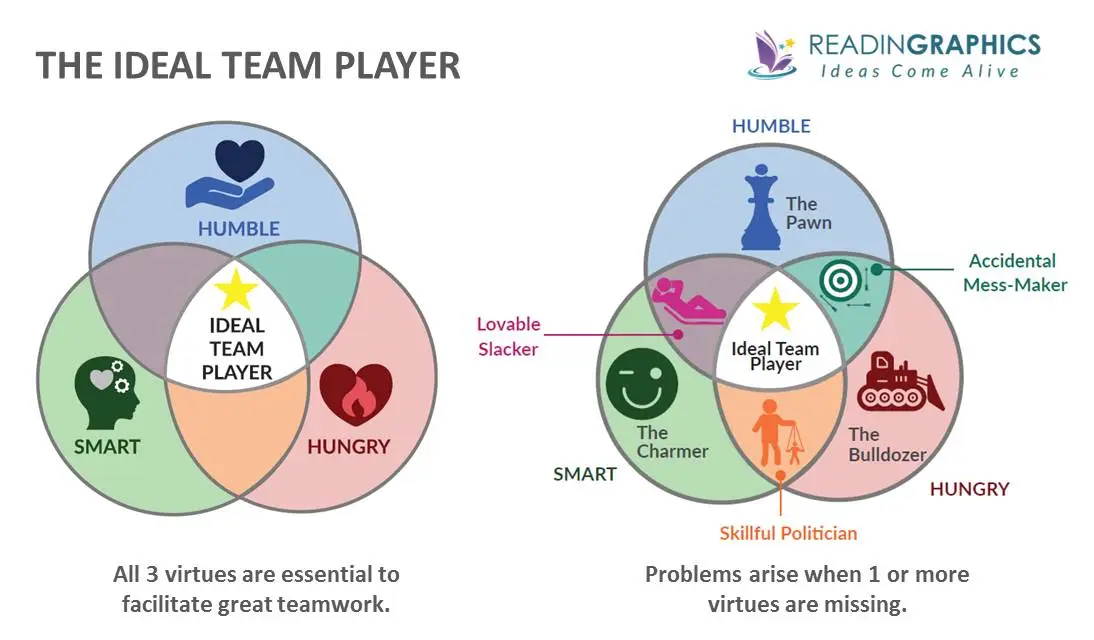
Through relatable characters and engaging portrayals, Lencioni introduces the three essential virtues: humility, hunger, and people-smarts. He demonstrates how these virtues, when cultivated and embodied by team players, create a foundation for exceptional teamwork. So, what are these virtues Lencioni describes as the pillars of exceptional teamwork?  

The Ideal Team Player for Your Dental Practice

Humility: 

  • Lencioni underscores the importance of humility as a fundamental virtue for team players. Humble individuals prioritize the needs of the team over personal recognition or ego. They readily admit mistakes, share credit with others, and actively seek feedback. Lencioni highlights how humility fosters trust, open communication, and a culture of continuous learning and improvement within teams. 

Hunger: 

  • The virtue of hunger refers to an individual’s relentless drive and passion to contribute to the team’s success. Hungry team players go beyond what is expected of them and are motivated to continuously improve their skills and make a meaningful impact. Lencioni emphasizes that leaders should seek out individuals who are self-motivated, proactive, and eager to exceed expectations, as they bring energy and commitment to the team dynamic. 

People-Smarts: 

  • The third essential virtue, people-smarts, focuses on an individual’s ability to understand and work well with others. Team players with high people smarts possess emotional intelligence, empathy, and strong interpersonal skills. They excel at building relationships, resolving conflicts, and collaborating effectively with diverse personalities. Lencioni explains how teams with members who exhibit people smarts are better equipped to navigate challenges and foster a harmonious work environment. 

Recognizing and Cultivating These Essential Virtues in Your Dental Practice 

“The Ideal Team Player” offers practical guidance on recognizing and cultivating these virtues within individuals and teams. Lencioni outlines strategies for hiring individuals who possess these qualities, providing actionable insights into conducting interviews and assessing candidates effectively. He also emphasizes the importance of ongoing coaching and development to nurture and strengthen these virtues in existing team members. The book offers tools and techniques to assess the current state of teamwork within your organization and offers actionable steps to create a culture that values and reinforces these essential virtues. These tools cover –  

  • Hiring the right people for your dental practice
  • Assessing current employees 
  • Developing employees 
  • Embedding this model into your organizational culture 

By embracing these principles and practices, you, as the leader, and your managers, can create high-performing teams within a culture of collaboration, trust and growth. Lencioni equips readers with the tools needed to transform their teams into cohesive and successful units, ultimately achieving exceptional results. The Ideal Team Player teaches you how to unleash the potential within your organization with the tools you probably already have and are under-utilizing.  

Optimize Your Results in Your Dental Practice 

At Optimize Practice Alliance, we know that a thriving dental practice isn’t built on systems alone, it’s built on people. High-performing teams don’t happen by accident; they’re shaped through clear expectations, strong communication, and consistent leadership.

That’s why we equip dental entrepreneurs with practical tools to strengthen team cohesion and accountability. One of the most effective is the DESC Coaching Template, a simple but powerful framework leaders use to address behaviors, clarify expectations, and resolve issues without tension or ambiguity.

The DESC model helps you:

  • Describe behaviors clearly and objectively
  • Express the impact those behaviors have on the team and practice
  • Specify what needs to change, or continue
  • Communicate outcomes and reinforce accountability

When leaders communicate with clarity and consistency, teams align faster, conflicts become productive, and trust strengthens across the organization.

If you want to move from talking about team alignment to actually creating it, this tool will help you lead the conversations that matter most.

Ready to strengthen communication and build a stronger team?

Supporting Dental Practices: The #1 Approach of Confident Leaders

Leadership As a Tool for Growth

How seriously do you take the concept of leadership in your dental practice? In my organization, we follow the EOS structure for our company meetings, team building and overarching goals and processes. Gino Wickman has created a comprehensive system for every aspect of running a successful organization. It truly works for us, and it has been a successful and exciting experience so far.  

We Practice What We Preach

We just had our 2nd Quarter, day-long meeting last week when we got to assess our first quarter and look ahead, plan and set realistic goals for our 3rd quarter. We also got to dig into some core issues within the company that were holding us back from accomplishing key benchmarks. These issues have been resolved and won’t be the issues that hold us back moving forward. There will be new issues to deal with in the next quarter and we will work those out using our EOS tools, as well, I have no doubt.  

During these meetings with our entire team, there are some wonderful, awful, dumb, ground-breaking and irrelevant ideas that get thrown around. There’s a lot of non-judgmental brainstorming that goes on in learning to move the needle in a new company.

What Does Lending Leadership Mean for your Dental Practice?

One of the ideas that came to me in the lead up to our Q2 meeting, is an idea I labeled, ‘Lending Leadership.’ I fell in love with this idea and threw it out to my team. They loved it too, because, as I explained to them, this is, essentially, our guiding principle with OPS. We are an organization dedicated to holding space for companies and practices while they integrate the processes, systems and structural changes they need to scale their organizations.  

These transitional times are confusing, challenging, scary and overwhelming for companies. What myself and my partner, Josh Gwinn, are dedicated to is lending our leadership during these times so that teams feel supported, directed and educated during these crucial transitions.  

The Concept of Lending Leadership

Another area we lend our leadership is through the process of evaluating your organization including what your practice looks like without more work from you, the practice owner. This is a crucial step in the scaling process. As the lead dentist, CEO, or leader of your organization you need to begin the process of extracting yourself from your daily activities within the practice while transitioning to working on the business. This entails even changing your calendar to reflect your new role within the company.  

As leaders who’ve gone through this very transition, both Josh and I, lend our leadership to making this transition as smooth as possible. And much of this transition involves changing your mindset. It might seem trivial but learning to move from the dentist’s chair into the role of leader/investor is an important and highly effective step in scaling your practice.  

It is your vision, direction and leadership that will shepherd your teams through the expansion process. And while your team is looking to you for direction, guidance and clarity you have the advantage of looking to us for expertise, mentorship and comprehensive team structure. We fill in the gaps until your teams are ready and able to guide the process.  

The Importance of Leadership in your Dental Practice

Lending our leadership ensures that you gain the highest valuation for your organization. This is a mutually beneficial process and outcome, and the guiding principle is your vision. In fact, the very first step we take at Optimize when working with new partners is what we call, Vision Day. We sit down with you and your teams to, above all, listen to what your vision for your organization is. If you’re not sure what your vision is we help you figure that out in a team setting so everyone is involved. Transparency, communication, honesty and compassion are the values we use to guide us through the Vision Day process.  

What Leadership Means to Us

We walk the talk. Our goal at Optimize is for our partners to gain clarity of their vision, be ensured of the highest valuation for their organizations, and be ready with strong teams, communications and processes in place for the scaling operation. This ensures mutual success and smiles all around. And it all starts with your vision, not ours. We are there to assist, clarify and lend leadership to provide a smooth experience for everyone. That’s how we roll.  

Mastermind your dental practice

Another Entrepreneurial Strategy That Works

Confident leaders don’t lead by reaction, they lead with intention. One of the most effective strategies any dental entrepreneur can adopt is creating clarity around what they stand for, where they’re going, and how they’ll get there. Without that clarity, even strong leaders can feel stuck, scattered, or unsure of their next move.

That’s why we created the Extraction GPS. This tool helps you clarify your values, assess your current reality, and define a clear direction forward so your leadership is grounded, consistent, and purposeful. When you know your destination, lending leadership becomes easier because your guidance is anchored in something real and intentional.

Lending Leadership at Optimize Practice Alliance

At Optimize Practice Alliance, we believe confident leadership starts with alignment. Our mission is to give dental entrepreneurs the tools they need to lead decisively, support their teams effectively, and build practices that reflect their values and long-term vision.

The Extraction GPS is one of the core tools we use to help leaders move from uncertainty to confidence. By defining what matters most and mapping a clear path forward, you create the foundation for stronger culture, better decision-making, and sustainable growth.

Ready to lead with clarity and confidence?

10 Essential Measures to Take before Scaling Your Dental Practice

 Are You Planning on Scaling Your Dental Practice Within the next 3 years? If so, there are certain measures you want to put into place before you even begin your scaling plan. Scaling a practice is a huge undertaking but there are certain steps to take now that will ensure your efforts are successful while building a stronger foundation for growth.  

Let’s say, you’re building a house. You need several essential elements. This will include sound architectural plans, a list of essential materials, trusted vendors, a team of contractors and workers, etc, to ensure you build a house that can withstand the elements, doesn’t become a source of toxicity for your family and will last beyond your lifetime. So, what if you’re building 30 more houses exactly like the first one? You need to duplicate those results. You’ll need a lot more of everything in greater numbers. Scaling is a big undertaking and in today’s economic environment it’s essential to any practice, eventually.  

It all starts with a healthy foundation, just like a house, or 30. Below, I’ve compiled a list of 10 implementations you start right now that will become the foundation of a much easier and more comprehensive scaling plan. And if you’re planning on beginning the scaling process in the next 3 to 5 years, you’ll want to get started now on implementing these measures. Starting now will mean less pressure, stress, drain on resources snd greater clarity of vision in the long run.  

10 Essentials Before You Scale Your Dental Practice 

  • Develop a Strong Brand Identity: Create a compelling brand that reflects the values and expertise of your dental practice. Use a professional logo, consistent color scheme, and cohesive visual elements across all your marketing materials.
  • Build an Online Presence: In today’s digital age, it’s crucial to have a strong online presence. Invest in a professional website that showcases your services, provides valuable information, and allows patients to book appointments online. Leverage social media platforms to engage with your audience and share educational content.
  • Prioritize Patient Experience: Focus on providing exceptional patient experiences. Train your staff to be friendly, empathetic, and attentive to patient needs. Implement efficient appointment scheduling, minimize wait times, and create a welcoming environment in your office.
  • Invest in Continuing Education: Stay up-to-date with the latest advancements and techniques in the dental industry. Attend conferences, seminars, and workshops to expand your knowledge and skills. This will enhance your credibility and ensure you can offer the best treatments to your patients.
  • Embrace Technology: Incorporate cutting-edge dental technologies into your practice. Invest in digital radiography, intra-oral cameras, and CAD/CAM systems to improve diagnostics, treatment planning, and patient communication. Technology can streamline your workflow and enhance patient outcomes.
  • Implement Effective Marketing Strategies: Develop a comprehensive marketing plan to attract new patients and retain existing ones. Utilize a mix of online and offline marketing channels, such as search engine optimization (SEO), pay-per-click advertising, social media marketing, direct mail campaigns, and patient referrals.
  • Provide Patient Education: Educate your patients about oral health, preventive care, and the benefits of regular dental visits. Create informative blog posts, videos, and brochures to empower patients to take better care of their teeth and gums. Informed patients are more likely to become advocates for your practice.
  • Foster Relationships with Specialists: Collaborate with other dental specialists in your area to offer comprehensive care to your patients. Establish referral networks and build strong relationships with orthodontists, oral surgeons, periodontists, and Endodontists. This collaborative approach will enhance patient satisfaction and expand your network.
  • Focus on Practice Management: Efficient practice management is crucial for success. Implement robust systems for appointment scheduling, billing, and patient records. Train your staff on proper communication and customer service skills. Regularly evaluate your practice metrics to identify areas for improvement.
  • Engage in Community Involvement: Demonstrate your commitment to the community by participating in local events, sponsoring sports teams, or organizing oral health awareness campaigns. Building a positive reputation in the community will help you attract new patients and foster loyalty among existing ones.

Scaling Your Dental Practice Starts with Visibility, Not Guesswork

How many of these foundational measures are already in place in your dental practice? How many are still ideas on paper? Scaling successfully isn’t about ambition alone, it’s about knowing, with clarity, whether your practice is actually prepared to grow.

True scale requires more than clinical excellence. It demands operational awareness, disciplined execution, and the ability to duplicate what’s working without creating chaos. The practices that scale well don’t guess, they track.

That’s why we created the OPA KPI Tracker. This tool helps dental entrepreneurs measure the metrics that matter most before, during, and after scaling. It gives you visibility into performance, highlights gaps early, and helps you decide where to focus your time, energy, and resources so growth feels intentional, not overwhelming.

Scaling done right is never all on your shoulders. It’s supported by systems, data, and a team aligned around clear priorities.

Thinking about scaling your dental practice?
Download the KPI Tracker to gain clarity on your readiness, focus on what truly drives growth, and build a foundation that supports sustainable expansion.

At Optimize Practice Alliance, we believe the future of dentistry belongs with dentists and clarity is one of the most powerful tools you can use to keep it that way.