Teamwork

The Silent Gap in Dental Practices: How to Communicate With Associate Dentists as a Dental Practice Owner and the 1 Solution You Need

Running a dental practice is no small feat, let alone learning how to communicate with associate dentists as a dental practice owner. Every day asks you to be a clinician, leader, visionary, problem-solver, and often the emotional center of your team. You’re responsible for clinical outcomes, culture, patient experience, team alignment, financial performance, compliance, all while staying afloat in the fast pace of the operatory.

So it’s no surprise that your relationship with your associate dentist, one of the most important relationships in your practice, can slip into the background. Not intentionally, and not because you don’t care, but simply because you’re carrying so much.

But here’s the truth:

Your associate relationship has the power to strengthen or strain your entire practice and communication is the determining factor.

The good news?
You don’t need to be a naturally gifted communicator to thrive in this role.
You just need a simple structure.

That’s where the DESC coaching model becomes an invaluable leadership tool.

Why Communication With Associates Breaks Down

If learning how to communicate with associate dentists as a dental practice owner feels challenging, it’s not because you’re doing anything wrong, it’s because you were never trained for this part of the job.

Dental school prepares you for:

  • Diagnosis
  • Treatment
  • Clinical mastery

But dental school does not prepare you for:

  • Leadership
  • Management
  • Coaching
  • Difficult conversations
  • Structured communication
  • Setting expectations
  • Navigating conflict

Owning a practice requires you to wear two hats, clinician and leader, and switching between these identities throughout the day isn’t easy. Often, it’s the associate who ends up on the receiving end of the gap.

And when communication slips, the symptoms start showing up quietly:

  • Misalignment
  • Disengagement
  • Quiet resentment
  • Cultural tension
  • Missed expectations
  • Declining performance

None of this comes from lack of intention.
It comes from lack of structure.

And structure is something you can give yourself.


What Associates Need Most (Even If They Don’t Say It Out Loud)

After coaching hundreds of dental entrepreneurs and associates across the country, we’ve learned that associates tend to want the same core things:

  • Clarity — What do you expect?
  • Connection — Are we aligned?
  • Support — Do you have my back?
  • Direction — Where are we headed?
  • Relationship — Do I matter here?

And the easiest way to deliver all of this?

Consistent, structured communication.

A simple monthly one-on-one, over coffee, breakfast, or a quiet hour in the office, can transform:

  • Trust
  • Engagement
  • Performance
  • Culture
  • Retention

You don’t need to wait until something is breaking.
In fact, the goal of these conversations is to ensure nothing ever gets that far. This is how to communicate with associate dentists as a dental practice owner, one conversation at a time.


How to Communicate With Associate Dentists as a Dental Practice Owner: Using the DESC Coaching Model

Tough conversations get avoided for one of two reasons:

  1. You don’t know how to start them.
  2. You’re afraid of how they’ll land.

The DESC coaching model takes all the fear and ambiguity out of the process. It gives you a clear, repeatable structure so the conversation feels calm, steady, and productive, not emotional or confrontational.

DESC stands for:

  • D — Describe the situation
  • E — Express how it impacts the practice
  • S — Specify new or continued behavior
  • C — Communicate the outcome

Let’s walk through the framework the way we coach it at Optimize Practice Alliance when we train on how to communicate with associate dentists as a dental practice owner.


D — Describe the Situation (Objectively, Not Emotionally)

This first step is about clarity, and clarity is kindness.

Instead of:

  • “You’re not working hard enough.”
  • “The team is complaining about you.”
  • “Your numbers aren’t good.”

You shift to:

“Over the last four weeks, I’ve noticed that three scheduled case presentations were not completed, and our treatment coordinator shared that she’s having trouble staying aligned with your plan.”

Facts. Not feelings.

This instantly lowers defensiveness and raises openness.


E — Express the Impact

People don’t change because they’re told to.
People change because they understand why.

Here you communicate the consequences respectfully:

  • “When these cases aren’t completed, patients wait longer for needed care.”
  • “The team becomes unsure how to support you.”
  • “Our flow gets disrupted, which impacts everyone’s day.”

This step forges connection.
It says, we’re in this together.


S — Specify New or Continued Behavior

This is where the conversation becomes actionable.

Instead of vague requests like:

  • “Do better.”
  • “Try harder.”
  • “Be more consistent.”

You say:

“I’d like you to complete all case presentations on the day the patient is seen and check in with the treatment coordinator at the start of each morning huddle.”

Crystal clear.
No guesswork.
No ambiguity.


C — Communicate the Outcome (What Success Looks Like, and What Happens If Nothing Changes)

This step isn’t about punishment.
It’s about giving your associate a clear sense of direction and removing the guesswork around what happens next.

You’re helping them understand:

  • What success looks like if the change is made
  • What the path forward becomes if the issue continues
  • How their actions connect to patient care, team flow, and practice goals

This is where clarity becomes accountability.

For example:

“If we get aligned here, patients move through care faster and the team works more smoothly. If we don’t resolve this, we’ll need to adjust your schedule or support structure so we can maintain consistency for our patients and team.”

You’re not threatening.
You’re communicating the outcome: the natural, practical next steps based on the results of the behavior. This makes expectations unmistakably clear while preserving trust and transparency.


Why This Framework Works

The DESC model is powerful because it:

  • Removes emotion
  • Eliminates confusion
  • Builds trust
  • Creates accountability
  • Protects the relationship
  • Gives you confidence
  • Gives your associate clarity
  • Prevents issues from compounding
  • Makes future conversations easier

And most importantly? It helps you grow your leadership identity.

At Optimize Practice Alliance, we’ve seen practices transform dramatically when owners embrace a structured, predictable communication rhythm built on DESC. It opens the door to better culture, better retention, and better performance, without tension or confrontation.


A Leadership Opportunity That Pays Off

Stepping into the owner–leader role doesn’t require sharp elbows or top-down management. It simply requires:

  • presence
  • intention
  • communication
  • structure

Your associate dentist is one of the best people to practice these skills with because the relationship directly impacts your culture and operational outcomes.

Regular conversations aren’t about correcting problems.
They’re about preventing them.
They’re about mentoring, aligning, and building a stronger practice, together.

And yes, this is a new muscle for many dental entrepreneurs.
But it’s one of the most rewarding leadership shifts you can make.


How Better Communication Strengthens Culture and Sets the Stage for Growth

When you communicate clearly, consistently, and confidently with your associate dentist, you’re not just improving one relationship, you’re strengthening the entire structure of your practice. A well-supported associate becomes:

  • more engaged
  • more accountable
  • more aligned
  • more consistent
  • more connected to the mission

And when that happens, something powerful unfolds:

Your team feels the stability.
Your culture tightens.
Your systems strengthen.
Your daily operations become smoother.

This is the foundation every growing practice needs.

When associates are aligned, supported, and communicated with effectively, you create the cultural and operational strength required to scale. It’s nearly impossible to grow a practice, or add providers, locations, or services, when the core leadership relationship is shaky.

Better communication doesn’t just solve today’s problems.
It unlocks tomorrow’s possibilities.

Want support preparing for your next tough conversation?

If communicating with your associate feels overdue, unclear, or awkward… you are not alone. And you don’t have to figure it out without support. We built a tool specifically for moments like this and we’re making it available to you for free, the DESC Coaching Template.

This template helps you structure your next difficult conversation with clarity, confidence, and calm, so you can lead your practice forward with intention instead of hesitation.

The tough conversations don’t get easier on their own.
But with the right framework, you, and your associate, get stronger together.


Values-Based Leadership in your Dental Practice: 5 Essential Benefits

When I met my business partner, Josh Gwinn, the thing that instantly connected us was our shared values. So, when we started Optimize we made our shared values a foundational principle in building our organization.    

I started exploring my own personal values and the role they played in my business life while working with Strategic Coach and specifically my coach, Cameron Herold. Defining my core values helped me in so many areas of my business life, including working with my teams, setting expectations for how we worked with patients, even choosing vendors and choosing the right path for scaling my organization.  

So, when it came time for Josh and I to set the groundwork for our vision of Optimize Practice Alliance, our shared values became foundational to both our vision and our strategic planning.  

Using Your Core Values in your Dental Practice 

But is it helpful or even appropriate to use your core values in your business as a dental practice entrepreneur? Implementing your values in your dental practice does have a lot of benefits. With your core values, you can:  

  • Showcase your unique ability and what sets you apart from other dental practices 
  • Find a common basis and understanding for communicating with your teams 
  • Create a strong team culture
  • Provide a foundation from which to make big and small decisions every day  
  • Galvanize your vision for growing your practice 

There are so many benefits to truly utilizing your core values as a dental entrepreneur. And they alone can set the tone and tenor of so many of your daily dealings that not utilizing them can leave you squandering for words, answers and solutions when they are needed most.  

What Are Your Core Values?  

How do you determine what your core values are? My process started in 2014 when I began working with Dan Sullivan at Strategic Coach. I went through a process of discovery using a concept called Unique Ability®. In that process I developed a set of beliefs that became my core values.  

But there are many ways of determining what your values are and which ones you want to be the core values in your dental practice organization. It behooves you to take some time and discover what your values are and how to apply them in your dental practice.  

But for now, I’d like to tell you about our core values here at Optimize. You can, of course, check out our About page and read our core values there. But I decided to dedicate an entire post to them, that is how important they are to the everyday functioning of our organization. They are vital to how we interact with each other and lend our leadership and dedication to our partners.  

Our values are the foundation of our actions, participation and cooperation and we strive to center those values in our interactions and daily execution of goals and our vision for Optimize and our partners. 

Using Mission, Core Values and Norms in your Dental Practice

We Believe in Transparency and Integrity  

Integrity and Transparency are the cornerstone values on which all of our other values are built. At Optimize our actions and words are rooted in integrity. We strive for clarity and honesty in all our interactions and take full responsibility for our results. Transparency is the natural companion to integrity, showing everyone, we work with how we do what we do, with the goal of bridging trust between our partners and ourselves.  

We Believe in Collaborative Teamwork 

Collaborative teamwork is how we stay rooted, not just in our vision for Optimize, but in the visions of our partners and clients. We not only value their input and feedback, but we also need those insights for us to stay accountable for the visions our partners trust us to achieve with them, not just for them.   

We Believe in Growth While Staying Focused on Results 

What does “results focused” really mean for us? At Optimize we view problems as tools for designing solutions to quickly and efficiently remove the obstacles to growth. Our ever-present focus is on the solution using accountability, collaboration and commitment to quickly resolve issues and create opportunities to reorient ourselves towards our goals. This unique advantage of seeing problems as opportunities creates an atmosphere of cooperation and cohesion and helps our teams and partners grow both personally and professionally.  

We believe in Giving World-Class Service 

Giving world-class service is a core value for Optimize. We strive to provide a cohesive, synergistic and professional experience for all our partners, clients and vendors. We also espouse this value across channels so that our vendors and service providers offer the same level of professionalism and world-class service.  

We Believe in an Ownership Attitude  

At Optimize our ownership attitude does not end at our doors. We vest our interests and stewardship in every single partnership we create and build. By taking this approach, we balance our organization’s needs alongside those of our individual team members and partners.  Our ownership attitude gives us the freedom to focus on long-term success rather than short-term profits for us and for you.  

We Believe in Optimizing our Potential  

It’s in our name, we optimize our potential through optimizing your opportunities for growth. And we start with the basics and strive for excellence in all we do. In optimizing your systems, operations and processes we learn, measure and grow your business with the best tools, strategies and vision while maintaining our focus on your individual and optimal personal experience.   

These values are what hold us apart from all others and give us the ability to give you the opportunity to grow your vision and live your dream because we believe the future of dentistry belongs with dentists.  

Putting Values-Based Leadership Into Practice

At Optimize, we believe that the best way to give back to our community of dentists is by equipping you with practical tools that bring your values and vision to life in your practice. As a dental entrepreneur, it’s not just about having strong values, it’s about building systems and strategies that make those values a living part of your business every day.

If you’re ready to lead with greater clarity and purpose, our free Extraction GPS Template is the perfect next step. This step-by-step worksheet will help you define your core values, assess your current position, and set clear, meaningful goals for the future of your practice.

Whether you’re aiming to strengthen your culture, set a new vision, or align your team around what matters most, the Extraction GPS gives you a practical roadmap to get there.

Ready to build a practice that truly reflects your values?
Download your free Extraction GPS Template now and take the first step toward a values-driven, growth-focused future.

The Power of Authentic Partnership for your Dental Practice, Part 4: Know Your Teams

One of things I learned from and most admire about my partner Jack Bayramyan is his ability to connect with people. This is a very important quality in a dental practice owner and, really, any entrepreneur. Being comfortable around people, being comfortable speaking with almost anyone, these abilities help create instant connection and really do half the “selling” in your business.  

The Importance of Social Capital in Your Dental Practice 

Social capital is the positive product of human interaction. It is the cohesion that allows the people within an organization to function together as a whole through trust, and shared identity, norms and values. When a leader invests her or his time in building social capital within their organization that demonstrates an innate understanding of what the human condition needs to flourish, thrive and grow. 

Taking seriously your responsibilities as a leader involves putting time and effort into understanding different leadership styles and which fit your personality best, studying your team’s dynamics and being open to feedback around your leadership. When you have mastered the essential leadership qualities you can begin to craft a team that will be with you for the long haul and fight for your vision as hard as you do.

When you have a leader that innately understands those necessities and builds them into the framework of team structures, that is a leader who understands how to grow a successful business. You cannot grow or expand or scale an operation without team buy-in. To gain team buy-in, you can operate in one of two ways. You can intimidate everyone and rule through fear, bullying and belittlement; or you can lead with integrity, compassion and discipline of message. Of course, there are all kinds of leadership styles, but they mostly fall into one of those two categories, generally speaking.  

Dental Practice Partnership – Making a Lasting Choice 

Before Jack and I made it official, I took a tour of his organization, a chance to “kick the tires” so to speak. We visited one of his practices and the first thing he did wasn’t tell me the revenue of that particular location, or how the systems or operations worked on a daily basis. No. The first thing Jack did was introduce me to all his staff and share with me a little bit about each individual.   

At the time, Jack owned 6 locations in Southern California. And he knew the names and backgrounds of every single person that worked for him. That impressed me more than their profit margins, their EBITDA, their monthly overhead or yearly returns. And by the end of that field trip, I knew I had found the person I wanted to partner with. I knew that if this person took team building, social capital and leadership investment, that seriously this would be a person who understood the power all of that had in building an operation to scale.  

Using Team Cohesion to Grow Your Dental Practice  

Growing and scaling a dental organization is an immense undertaking and it’s not something you can do alone. Whether or not you ever enter into a formal partnership, long-term growth depends on your ability to build teams that are aligned, motivated, and committed to a shared direction.

True cohesion doesn’t come from job descriptions or compensation alone. It comes from leadership that understands what drives people, what inspires them, and what makes them believe in something bigger than their daily tasks. As Theodore Roosevelt famously said:

“People don’t care how much you know until they know how much you care.”

You can hire people who will show up and do their jobs. But inspiring people to fight for a vision requires clarity about where you’re going, why it matters, and how their work connects to that future.

That’s why we created the Extraction GPS. This tool helps dental practice owners clarify their values, define their current reality, and articulate a clear vision for where they’re headed. When your vision is clear, team alignment becomes possible. When alignment exists, cohesion follows and growth becomes sustainable.

Thinking about scaling your dental practice and strengthening your team along the way?
Download the Extraction GPS to gain clarity on your vision and give your team something meaningful to rally around.

At Optimize Practice Alliance, we believe the future of dentistry belongs with dentists and that future is built by leaders who lead with clarity, intention, and care.

The Power of Authentic Partnership for Your Dental Practice, Part 3: Building Your Culture 

In your dental practice, culture is king. When I first met Jack Bayramyan, I was skeptical. A dental practice owner, I could tell right away that he was a nice person, but I had no idea what he valued, what his priorities were or the vision he wanted to achieve. However, all that changed during the course of a day.  

What started out as an intro meeting with Jack and bankers about money and investment, eventually turned into a meandering discussion between Jack and I about culture. In the video below, you’ll see, at one point during that pivotal day, Jack asked me aside for a private conversation. I assumed he just wanted to get to know me, so I obliged because I was interested in the same thing.  

Sitting in a room full of bankers or investors, the discussions tend to focus on one thing: money. But Jack was savvy enough to look beyond those discussions and I was curious as well. During that private conversation, I really got to know Jack, the human being. And maybe even more importantly, I got to know how he worked as an entrepreneur.  

In Your Dental Practice Culture Begins with You 

I’m a talker. I love to talk, but I think that is a by-product of my real passion, which is teaching. Teaching requires two fundamental components: talking and listening. So, in my initial private conversation with Jack, I went first. I opened up and spoke from the heart about the things that mattered most to me in my organization, what did I have to lose?  

I spoke about my values, my goals, and most importantly to me, the culture of my company and how it was created. And I’m glad I had the courage to open up and speak on that level to someone I had just met. Turns out, he shared my opinions on those topics and was inspired to speak from the heart as well. We found we had three primary areas of focus when it came to building an organization: 

  • Culture is foundational to a company, no matter how successful or not 
  • Culture is built by the people and teams that use it 
  • Culture is transformed over time by these relationships 

Any organization, whether it is successful or not, is built on the foundation of the culture of the people that work in that organization. You can have a counterproductive culture built on the naked ambition of the people working within that culture. But you can also build an organization on a culture of compassion, open-mindedness and balance. Many times, it is the values of the leader that begin and build that culture. But if you have an absent CEO, or a leader whose values are based in, say, greed, selfishness and a “my way or the highway” attitude, that will be the driving foundation of the culture that is built.  

So, as a dental entrepreneur, if you want a culture that reflects your values, you need to show up and pay attention to your leadership style, your willingness to change and your focus on a growth mindset. If you’re not paying attention to these things, your dental practice’s culture will be formed by the dominant personalities within your organization. That may or may not be a good thing, but it won’t be intentional.  

Who is Going to Drive Your Vision in Your Dental Practice?  

The second area of focus as a leader is learning to pay attention. You may be intentional in the values and tone you set to build that culture, but it will ultimately be your teams living and working within the framework of that culture that will build and expand upon it.  

So, it’s your job to continually observe, listen and speak from an intentional position. You can’t just build the foundation of something and walk away expecting people to just pick it up and run toward the finish line. As a leader in your dental practice, you must pay attention to the tone you set and the tone your teams keep: are they in alignment? And if not, it’s your job to get your teams refocused on the tone and values you’ve set. For us, at OPS this comes in the form of weekly check-ins and a weekly company huddle as well as quarterly meetings keeping us focused on our vision and culture.  

You may have a very clear vision of where you want to take your organization, but if you don’t have buy-in from your team, you won’t get there. And buy-in comes from team members who want to see you, their organization and themselves succeed. If they don’t have hope that they will succeed, if they feel your eye is not on the ball or if they feel they ‘re just clocking into a job with no future for them, they won’t have the cohesion to rise to the level you need to reach your goals. It starts with you.  

Finally, the third focus is learning to stay aware of how culture transforms over time. It is the relationships within your organization that will dictate how this culture changes and adapts as your dental practice grows and expands. How your culture changes and adapts is dependent on the top team members and how they translate your values and vision company wide. 

If you’re not checking in with your leadership teams regularly and mentoring their leadership styles and directives, the culture you meticulously built in the beginning will erode over time and collapse even as your organization expands and grows. That’s where a lot of scaling organizations run off the tracks, because they can’t contain the fallout that permeates the culture through its growth.  

It Always Starts at the Top in Your Dental Practice 

So, whether you’re building the culture, choosing the people who will live in that culture or caring for it over time, it is your attention and focus on the culture staying healthy, nimble and cohesive that will steer the ship toward your vision.  

And this is what I found out during my conversation that day with Jack. He shared that same level of attention to culture that I have. He knows that to reach his vision he needed a healthy, strong cohesive team and he knew that team had to last the distance to eventually reach his vision. By the time we met, he had reached his vision, so he had a roadmap of leadership style. It wasn’t just about our shared values; it was about having the mindset of attention to culture where we found common ground.  

Your Vision for Your Dental Practice 

Authentic partnerships only work when leaders are clear on their own vision. As Jack and I have both experienced, finding your voice as a leader, and having the confidence to stand behind it, is pivotal to scaling successfully and choosing the right partners along the way.

At Optimize Practice Alliance, part of our role is helping dental entrepreneurs clarify that vision and lead from it with intention. Growth mindset, leadership style, and strategic direction all intersect here. Without clarity, even well-intentioned partnerships can drift. With clarity, alignment becomes possible.

That’s why we created the Extraction GPS. This tool helps dental practice owners define what truly matters to them, assess where their practice is today, and map a clear path forward, so every major decision, including partnership, supports the future they want to build.

Your vision should lead the way.

Ready to clarify your vision and guide your practice forward with confidence?
Download the Extraction GPS and start building a roadmap that supports intentional leadership, aligned partnerships, and sustainable growth.

Your Dental Practice and your Team: 3 Secrets to Cultivating the Ideal Team Player

Are you struggling with creating and keeping together healthy teams within your dental practice? Do you find that the same issues keep coming up again and again? Is the productivity within your teams not as high as it could be? Finally, could your team members use a boost of confidence, enthusiasm, focus, productivity or maybe all of the above? I’ve got just the book for you!  

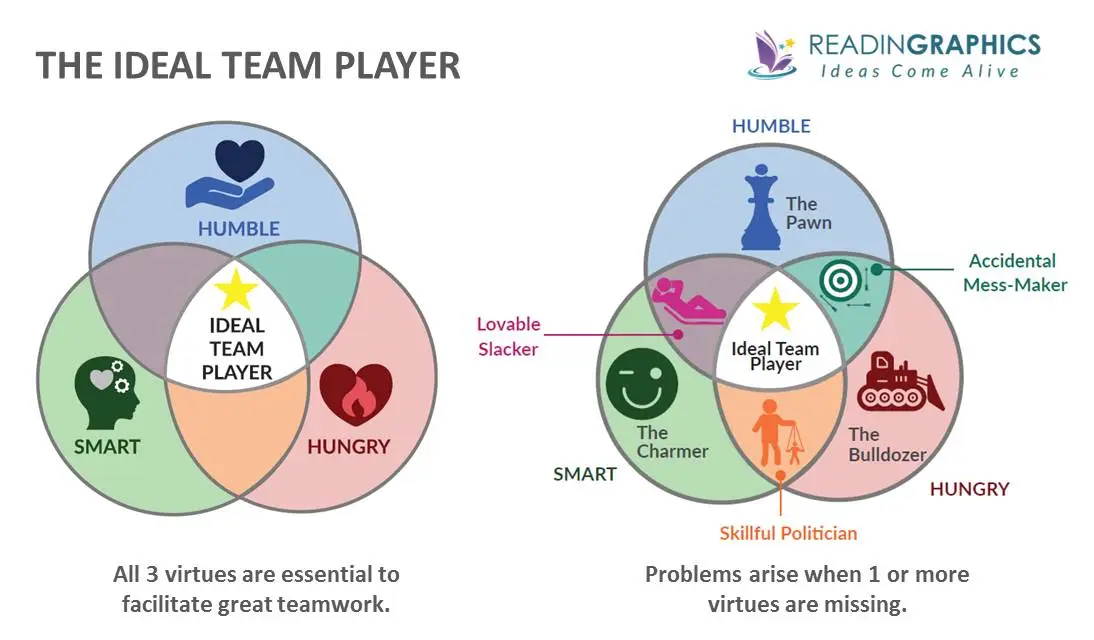
Within the realms of leadership and teamwork in organizations, identifying individuals who possess the qualities necessary to thrive in a team setting is crucial. In 2016, Patrick Lencioni wrote, The Ideal Team Player: How to Recognize and Cultivate the Three Essential Virtues. This book will lend you the very solutions you need to solve these issues. Patrick Lencioni is arguably one of the world’s leading experts on healthy organization building and team cohesion.

What A Lack of Cohesive Team Structure Means for Your Dental Practice 

However, before we delve into Patrick Lencioni’s essential work, let’s look at why teamwork is vital to the success of your dental practice. First, let me say, you’re not alone. Lencioni wrote this book because the issues and obstacles faced by teams within organizations are universal and ubiquitous. And solving them is no small feat. Hopefully, this post will offer some real solutions for you and your dental practice. 

Teamwork within any organization is pivotal and determinant to the success of that organization. I cannot be any clearer than that. So, what are some common problems associated with weak or non-existent teamwork?   

Lack of Communication

  • Poor teamwork often results in inadequate communication among team members. When there is a lack of effective communication, crucial information may not be shared, leading to misunderstandings, errors, and delays in decision-making. It can also create a fragmented work environment where employees feel disconnected and isolated without proper problem-solving mechanisms or processes at their disposal.  

Low Productivity

  • Weak or non-existent teamwork can significantly hinder productivity. When team members are unable to collaborate efficiently, tasks take longer to complete, and the overall workflow becomes inefficient. Without proper coordination, standardized processes and support from one another, individuals may struggle to meet deadlines and achieve their goals. 

Increased Conflicts and Tension

  • Poor teamwork can contribute to heightened conflicts and tension among team members. When individuals do not work well together or lack the necessary communication skills, disagreements can escalate, and relationships may become strained. This can create a toxic work environment, hampering morale and job satisfaction within your dental practice. 

Lack of Innovation and Creativity

  • Teamwork is essential for fostering innovation and creativity. When collaboration is weak, opportunities for brainstorming, sharing ideas, and leveraging diverse perspectives diminish. Without a collaborative environment that encourages innovation, organizations may miss out on valuable insights and potential breakthroughs. 

Decreased Employee Engagement

  • A lack of teamwork can lead to decreased employee engagement and motivation. When individuals feel isolated or unsupported by their team, they are less likely to feel connected to their work and the organization as a whole. This can result in decreased job satisfaction, higher turnover rates, and reduced overall performance. 

Missed Opportunities for Learning and Development

  • Strong teamwork provides an environment that promotes learning and development. When teamwork is weak, individuals may miss out on valuable opportunities to learn from their peers, share knowledge, and grow together. This can hinder individual and collective growth within the organization. 

Reduced Patient Satisfaction

  • Collaboration and effective teamwork are crucial for delivering high-quality services for your patients. Weak teamwork can lead to miscommunication, errors, and a lack of coordination, all of which can negatively impact patients’ experience in your dental practice. Without a cohesive team working together, meeting patient needs becomes challenging. 

Improving communication, fostering a collaborative culture, and providing the necessary support and resources for teams to succeed is your job as the leader of your organization. So, how do you recognize and fix the issues associated with weak teamwork thereby building stronger teams and enhancing overall performance and success?  

Elevating Team Solutions in Your Dental Practice 

In his book, author Patrick Lencioni presents a captivating exploration of the key virtues necessary for effective collaboration within a team structure. Let’s delve into the core concepts of the book and discuss its practical insights on recognizing and developing these virtues with your own team members. 

Patrick Lencioni’s instructive narrative takes the form of a leadership fable, weaving a story around a fictional company grappling with teamwork challenges. These challenges are universal, showing up and causing issues in most workplaces: miscommunication or non-existent communication, lack of accountability, weak follow-through; all of which lead to less than stellar results from your team culture.  

Through relatable characters and engaging portrayals, Lencioni introduces the three essential virtues: humility, hunger, and people-smarts. He demonstrates how these virtues, when cultivated and embodied by team players, create a foundation for exceptional teamwork. So, what are these virtues Lencioni describes as the pillars of exceptional teamwork?  

The Ideal Team Player for Your Dental Practice

Humility: 

  • Lencioni underscores the importance of humility as a fundamental virtue for team players. Humble individuals prioritize the needs of the team over personal recognition or ego. They readily admit mistakes, share credit with others, and actively seek feedback. Lencioni highlights how humility fosters trust, open communication, and a culture of continuous learning and improvement within teams. 

Hunger: 

  • The virtue of hunger refers to an individual’s relentless drive and passion to contribute to the team’s success. Hungry team players go beyond what is expected of them and are motivated to continuously improve their skills and make a meaningful impact. Lencioni emphasizes that leaders should seek out individuals who are self-motivated, proactive, and eager to exceed expectations, as they bring energy and commitment to the team dynamic. 

People-Smarts: 

  • The third essential virtue, people-smarts, focuses on an individual’s ability to understand and work well with others. Team players with high people smarts possess emotional intelligence, empathy, and strong interpersonal skills. They excel at building relationships, resolving conflicts, and collaborating effectively with diverse personalities. Lencioni explains how teams with members who exhibit people smarts are better equipped to navigate challenges and foster a harmonious work environment. 

Recognizing and Cultivating These Essential Virtues in Your Dental Practice 

“The Ideal Team Player” offers practical guidance on recognizing and cultivating these virtues within individuals and teams. Lencioni outlines strategies for hiring individuals who possess these qualities, providing actionable insights into conducting interviews and assessing candidates effectively. He also emphasizes the importance of ongoing coaching and development to nurture and strengthen these virtues in existing team members. The book offers tools and techniques to assess the current state of teamwork within your organization and offers actionable steps to create a culture that values and reinforces these essential virtues. These tools cover –  

  • Hiring the right people for your dental practice
  • Assessing current employees 
  • Developing employees 
  • Embedding this model into your organizational culture 

By embracing these principles and practices, you, as the leader, and your managers, can create high-performing teams within a culture of collaboration, trust and growth. Lencioni equips readers with the tools needed to transform their teams into cohesive and successful units, ultimately achieving exceptional results. The Ideal Team Player teaches you how to unleash the potential within your organization with the tools you probably already have and are under-utilizing.  

Optimize Your Results in Your Dental Practice 

At Optimize Practice Alliance, we know that a thriving dental practice isn’t built on systems alone, it’s built on people. High-performing teams don’t happen by accident; they’re shaped through clear expectations, strong communication, and consistent leadership.

That’s why we equip dental entrepreneurs with practical tools to strengthen team cohesion and accountability. One of the most effective is the DESC Coaching Template, a simple but powerful framework leaders use to address behaviors, clarify expectations, and resolve issues without tension or ambiguity.

The DESC model helps you:

  • Describe behaviors clearly and objectively
  • Express the impact those behaviors have on the team and practice
  • Specify what needs to change, or continue
  • Communicate outcomes and reinforce accountability

When leaders communicate with clarity and consistency, teams align faster, conflicts become productive, and trust strengthens across the organization.

If you want to move from talking about team alignment to actually creating it, this tool will help you lead the conversations that matter most.

Ready to strengthen communication and build a stronger team?

How Does Culture Contribute to the Bottom Line in Your Dental Practice? 

Communication, Clarity and Cohesion within Your Dental Practice is paramount to your success. But how do you achieve it successfully? I’ve just finished reading The Four Obsessions of An Extraordinary Executive: A Leadership Fable by Patrick Lencioni. It’s a very good illustration of how mindful leadership leads to success throughout an organization. It’s told in the manner of a Rich Dad, Poor Dad type of scenario. One company thrives while the competing company struggles under a frayed culture. While I didn’t find any information that was new to me, it illustrated extremely well how an organization bereft of cohesion, focus, communication and intention suffers and implodes. While an organization driven by a leader with clear vision, strong intentions, transparent and direct communication thrives in an environment of cohesion and unity.  

The book echoes my own beliefs and leadership style and I was reminded of a lot of sound principles and strategies. So, it’s a good reminder for a seasoned team leader and an excellent resource for someone new to a leadership role.  

Four Principles to Establish in Your Dental Practice 

The primary focus of the book to teach leaders how to ensure that their entire team structure is 100% clear on the focus and intention of the organization. I don’t disagree with anything that Lencioni illustrates in the book as important to a leadership role. These are solid principles that will enhance any leader’s role while training new leaders in sound strategies to take into any future leadership position.  Lencioni calls them disciplines:  

  • Discipline 1 – Build a Cohesive Leadership Team

Lencioni considers this the most important of the disciplines in creating a healthy organization with leadership that develops and maintains high-performance.  

  • Discipline 2 – Create Clarity 

The book examines six questions that root out contradiction and cross-purposes in order to create cohesive clarity at the executive level, an essential step before attempting clarity within the organization.  

  • Discipline 3 – Overcommunicate Clarity 

Once clarity is established at the ‘top’ that messaging needs to be communicated over and over again to the entire company, while maintaining consistency, intention and focus.  

  • Discipline 4 – Reinforce Clarity 

The answers to those six questions need to be reiterated again and again to ensure it becomes “embedded into the fabric of the organization” while all functions of the organization are filtered through those answers.  

The book makes it clear that it is the leaders’ job to build and fully protect the culture of the organization. And it is up to the leadership team to ensure that throughout the organization everyone understands what the company aspires to be, and the principles with which it operates.  The focus, as Lencioni makes clear, is on ensuring that all communication flows down to team members in a manner that continually and consistently establishes alignment throughout the organization. 

This book is worthy of your time if you aspire to a leadership role, want to enhance your leadership capabilities or are entering an organization badly in need of a cultural makeover.  

How Does the Culture You Create Affect Your Bottom Line in Your Dental Practice?  

Culture is built through intentional leadership. As a practice owner, it’s your responsibility to define what’s acceptable, what’s encouraged, and what’s non-negotiable. Without clear direction and consistent follow-through, cultures drift, leading to misalignment, inefficiency, miscommunication, and wasted energy.

At Optimize Practice Alliance, we believe strong cultures are created through clarity, communication, and accountability. These principles don’t live on posters or in mission statements, they show up in everyday conversations between leaders and their teams.

That’s why we created the DESC Coaching Template. This tool gives dental entrepreneurs a simple, effective framework to address behaviors, clarify expectations, and reinforce accountability without tension or ambiguity. When leaders communicate clearly and consistently, trust increases, performance improves, and culture begins to positively impact the bottom line.

Culture isn’t abstract, it’s operational. And when it’s led intentionally, it becomes a competitive advantage.

Ready to strengthen your culture through better leadership conversations?