Teamwork

Unleashing your Unlimited Leadership Potential as a Dental Entrepreneur: 4 Lessons of Extreme Ownership

How seriously do you take leadership as a dental entrepreneur? I went into the U.S. Navy straight out of high school. I spent 6 years in the Military and then ended up in optometry as a vision technician. I was a vision tech for about 3 weeks before being promoted to practice manager. I then spent about 6 years in that optical group managing 35 locations. I became a director of operations, opening de Novos on the East Coast before moving into dentistry in 2012 in my first role was as a VP of Operations for Great Expressions. I moved from vision tech to CEO within 10 years.  

Taking Extreme Ownership of My Own Future 

It was a fast rise, but I got one of my biggest lessons about leadership when I joined Hero Practice Services, a full-service pediatric dental group. The year prior to my joining, Hero had an EBITDA of $13 million. The CEO before me had taken the company’s value from $13 million to $6 million in 11 months. In addition to that, they had a turnover rate in providers of 70% for the previous 12 months. I walked into a dismal, disheartened team and company environment. So I did what I had trained to do as a leader in the Navy.  

I started cleaning out latrines with my soldiers. I put on scrubs and started taking out the trash, cleaning operatories and asking the teams how best I could support them. My actual question to my teams was, “how can I support you while you support the boss?” Some looked at me quizzically, asking, “aren’t you the boss?” And my response was always, “Our bosses are the 5 year-olds walking through our doors every day needing our services and care.”

To me, that is the definition of extreme ownership as a CEO.  I was willing to do any and all jobs to get us back on track and instill a sense of pride, ownership and stability in my teams, no matter how many practices I had to walk into.

Careless Leadership Leads to Care-less Teams 

It’s very easy to get caught up in labels, hierarchy, power, etc. and if you’re not careful, as a dental entrepreneur and leader in your dental practice you can inadvertently create a culture of those kinds of qualities and values. One of the aspects of my job at Optimize Practice Alliance is executive coaching our doctors to help them understand that it’s perfectly fine to be wrong, but it’s not fine to be wrong and blame other people or power-trip them, etc.  

Turning Extreme Ownership into Real-World Results 

Back at Hero, we went from about 40 practices to around 70 and grew our revenue from roughly $60 million to about $140 in a 28-month period. We more than doubled the valuation. We also expanded into 2.5% of the national Medicaid market and sustained that growth until about December 2021 when I left the company to help found OPA. So, what that tells me is we parlayed that cultural shift, always asking “Who’s the real boss?” into hard numbers and a solid increase in market share and company valuation.  

As a CEO, I am constantly seeking ways to enhance my leadership skills and drive our organizations toward sustained growth and innovation. When I read Extreme Ownership: How U.S. Navy SEALs Lead and Win by Jocko Willink and Leif Babin I saw in that book the embodiment of my values as a leader and how I teach and coach those principles for our dental entrepreneurs. This book provides profound insights into leadership that are both transformative and practical for dental entrepreneurs. So, I want to share some of my insights here.  

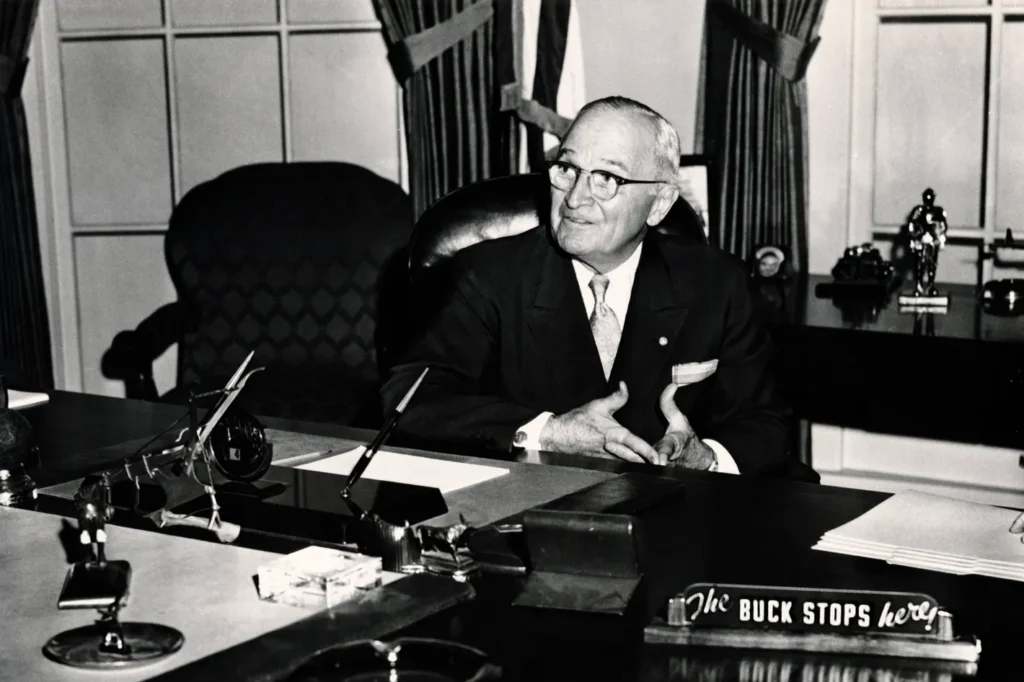
President Harry S. Truman and his famous sign, The Buck Stops Here!

Understanding Extreme Ownership 

There are many great themes in this book, but the central tenet is the concept of extreme ownership, which posits that leaders must take absolute responsibility for everything in their domain. Harry Truman, the 33rd president of the United States, kept a sign on his desk that read, “The buck stops here.” For me, this quote encapsulates the essence of extreme ownership.

This principle is rooted in the experiences of Willink and Babin as Navy SEAL officers, where the stakes were, quite literally, life and death. By taking complete ownership, leaders can effectively guide their teams toward success while instilling a culture of accountability and resilience. And complete ownership for these leaders, means owning the good decisions (not the credit) as well as the bad ones. The buck stops here. Following are the themes I extracted and wanted to share you with you here.

Key Lessons for Leaders

  1. No Bad Teams, Only Bad Leaders: One of the most striking lessons from the book is the idea that team performance is a reflection of leadership quality. Willink and Babin recount how changing the leader of an under-performing team led to a dramatic turnaround. For dental entrepreneurs, this underscores the importance of developing strong leadership throughout their organization and not shying away from making necessary leadership changes when needed. 
  2. Decentralized Command: Effective delegation is critical. The book emphasizes the need for leaders to empower their subordinates to make decisions and take ownership of their roles. This decentralization not only fosters a sense of ownership at all levels but also ensures that decisions are made closer to the action, increasing agility and responsiveness. For dental entrepreneurs this is crucial for a well-running front office, buzzing operatories and happy hygienists.
  3. Prioritize and Execute: In high-pressure situations, the ability to identify the most critical tasks and focus resources on them is crucial. Willink and Babin’s approach to prioritization helps leaders manage multiple competing demands without losing sight of the primary objectives. For dental entrepreneurs, this means clearly defining priorities and ensuring that the entire organization is aligned with these goals. For instance, if you’re in the middle of scaling your organization while still working chairside, you need to prioritize and execute while your teams do the same. This is crucial to your scaling success.
  4. Simplicity: Complexity can be the enemy of execution. The book advocates for simplifying plans and communication to avoid misunderstandings and ensure clarity. In the business world, this translates to clear, concise strategies and communication that everyone in your dental organization can understand and rally behind. For a dental entrepreneur, simplicity not only translates to greater execution, it ensures safer and better patient outcomes.

Implementing Extreme Ownership as a Dental Entrepreneur 

Implementing the principles of extreme ownership requires a shift in mindset and culture. I’ve put together a short list of practical steps you can take to start integrating these lessons into your dental organization. This list is by no means exhaustive, but it is a solid start with minor shifts in your thinking, processes and accountability as a dental entrepreneur:

  • Model Ownership: Demonstrate extreme ownership in your actions. Acknowledge mistakes openly, take responsibility for failures, and share credit for successes. 
  • Empower Your Leaders: Train your leadership team in these principles, ensuring they understand and embrace their roles as owners within their domains. 
  • Simplify Processes: Review and streamline your organization’s processes and communication channels to enhance clarity and efficiency. 
  • Encourage Open Communication: Foster an environment where feedback is welcomed, and information flows freely up and down the chain of command. 
  • Read the Book: This book is a quick read and the stories are fascinating. Take some time to read it and digest this invaluable information. It can’t hurt and it will most definitely have a profound impact on you as a leader and enhance your skills as a dental entrepreneur.

A Blueprint for Transforming your Dental Culture 

Extreme Ownership is more than yet another book on leadership; it is a blueprint for transforming organizational culture and guiding exceptional performance. As dental entrepreneurs, adopting these principles can help us build more resilient, accountable, and agile organizations. Whether you are navigating a turnaround in your practice, scaling for growth, or simply looking to refine your leadership approach, the lessons from Willink and Babin offer invaluable guidance. Embracing these principles will give you the tools to lead your organization to profound success and realize your vision. 

Support for the Dental Entrepreneur Starts with Clear Direction 

High-performing leaders move fast, but the best ones don’t move blindly. Unlimited leadership potential isn’t unlocked by speed alone; it’s unlocked by clarity of purpose, alignment around values, and a clear direction for where you’re taking your team.

That’s why we created the Extraction GPS. This tool helps dental entrepreneurs clarify what they stand for, define where their practice is today, and map out where they’re going, so execution is driven by intention, not chaos. When your vision is clear, your team can move faster, make better decisions, and execute with confidence.

Leadership becomes simpler when everyone knows the destination. Trust increases. Accountability strengthens. And momentum becomes sustainable.

Ready to lead with purpose, clarity, and conviction?

5 Proven Behaviors That Turn Your Dental Practice into a “Yes” Provider

When dental practice teammates, partners, or patients come to us with questions or requests, I truly believe that it is a leader’s job to enthusiastically say Yes! as often as we possibly can. 

Thoughtfully wielding the power to answer in the affirmative and help someone we serve create value for themselves and their lives is a seemingly superhuman ability to have; it is truly a power that creates momentum for people’s lives and dreams.  And when used in conjunction with strong expectations, open communication, and the ability to say ‘no’ when that is the right answer it is an excellent way to establish a culture of respect, empowerment, drive, and dedication within your team.  

Become a Yes provider in your Dental Practice
How to Become a Yes Provider in your Dental Practice

Early in my military career one of my leading Chief Petty Officers, (who loved giving unsolicited advice) pulled me aside one day and said, “Gwinn, everyone will figure out you’re good, if you’re good. You don’t have to tell them.” I guess that like so many of us in our less mature years, I had a tendency to try too hard to impress others at times, and he called me right out for it with pleasure and for sport. 

Maybe a bit because of the embarrassment I felt being called out in front of my peers, buy definitely because I felt like I’d taken a chair of truth straight to the forehead, I’ve never forgotten his words. It’s something I ponder regularly and make sure I live into because it’s something I truly believe. If you’re doing a good job people will notice.  

The lesson in his words is simple: work hard, grow, show results, and everyone will see it. The way I do this in my work with Optimize Practice Alliance is through actively leading our teams, being accountable, staying connected to the daily activities of our company and making sure that I am constantly providing guidance, mentorship and transparency to our clients.  

So, how do you show this type of leadership mentality with your teams as a dental practice owner? What are the principles we at Optimize follow and use to guide entrepreneurs in implementing in their own organizations? And what exactly are the qualities that make a ‘yes’ provider?  

What Is A ‘Yes’Provider?  

I believe that being a ‘yes’ provider starts with excellent patient service from the team at the front desk, the very first contact with your patient and client. It could be a walk-in, a first-time appointment or an inquiring phone call. No matter what the first point of contact is, it is your responsibility as the provider and business owner to instill the importance of first contact in your teams and employees. If your organization has an adversarial relationship with patients that will be apparent in the first contact. The entire front team should take responsibility for this as collectively they are the Directors of First Impressions in your practice. 

A brusque attitude, a dismissive tone, or a hostile front office environment can and will send people out your door forever. It may not be the first time. The patient may give your office the benefit of the doubt, but eventually you will lose them forever. And you will stay in a cycle of scrambling for patients, struggling with your front office and in a constant state of overwhelm with problem-solving overload.  

The ‘Yes’ mentality starts at the Top, the Dental Practice Owner 

So Doctor, why run a business that has an adversarial relationship with patients? It is a waste of time, a waste of money and most importantly, a waste of a great opportunity. You will also, in the long term, lose good workers and team players. After all, who wants to show up to a negative environment every day? It’s not sustainable. If I were in your shoes, here is where I would start… 

It starts with you, the business owner, the dental entrepreneur. It is solely your job to instill the values you want to convey to your patients in your team.  In their book, Extreme Ownership: How U.S. Navy Seals Lead and Win, Jocko Wilink and Leif Babin describe the leadership mindset as taking 100% ownership of everything, the wins and the failures. They write,  

“The SEAL troops and platoons that didn’t perform well had leaders who blamed everyone and everything else—their troops, their subordinate leaders, or the scenario. They blamed the SEAL training instructor staff; they blamed inadequate equipment or the experience level of their men. They refused to accept responsibility. Poor performance and mission failure were the result. The best-performing SEAL units had leaders who accepted responsibility for everything.

Every mistake, every failure or shortfall—those leaders would own it. During the debrief after a training mission, those good SEAL leaders took ownership of failures, sought guidance on how to improve, and figured out a way to overcome challenges on the next iteration. The best leaders checked their egos, accepted blame, sought out constructive criticism, and took detailed notes for improvement. They exhibited extreme ownership, and as a result, their SEAL platoons and task units dominated.”  

This passage illustrates two aspects of leadership. The first aspect is how the team leaders viewed their roles as leaders and the second aspect was how they conveyed this view to the people they were leading. The most important takeaway for me from this passage is, how important these team leaders viewed the role of leadership.  

On multiple occasions, I’ve walked into a dental organization to discover a dental owner who viewed his or her role as solely the dentist.  The various other teammates had their roles and they all worked typically independently of each other without a clear sense of teamwork, cohesion or even camaraderie. They all just clocked in, did their various duties and clocked out at the end of each day. 

They consistently left an incredible amount of productivity, opportunity for growth, and also opportunity for personal fulfillment on the table.  Those kinds of practices typically have high patient turnover, high employee turnover, stagnant growth, higher overhead costs, and lower EBIDTA margins than a practice that has a fully engaged owner who is leading the team with energy, consistency, and effort.  

The worst scenario is the type of practice I just described at the tail-end of a growth cycle where everyone is pretty burnt out and the overall tone in the practice is one of resentful tolerance. We’ve all had those types of experiences walking into a doctor’s office of one kind or another where the receptionist doesn’t look up to greet you, the doctor phone’s in his or her time with you and then you leaves wondering if you should have made another appointment or if there will be any follow-up on their part. That type of office goes from overwhelm to collapse of the growth cycle pretty quickly.  

So…… 

  • What stops employee turnover?  
  • What stops patient churn?  
  • What extends the lifecycle of a dental practice?  

The simplest answer is Leadership.  

80% Trust, 20% Hard Work 

I believe that 80% of what we do as leaders is cultivate trust. We must cultivate trust first in our employees and second in our patients. So how does a leader turn his or her practice into a ‘Yes’ provider? There are some simple and concrete foundational behaviors that every successful dental provider follows. They are not complicated or difficult behaviors to adapt but it may take some time to get all your team members on board if they don’t at first trust you or the process. These are principles and behaviors that, at first might be challenging for some members of your team, but in the long run will instill your practice with resilience, cohesion and high productivity.    

Five Behaviors that Make Your Dental Practice a ‘Yes’ Provider  

Below are five behaviors we have found in working with dental practices that increase business and revenue, keep patients coming back and allow your teams to stay cohesive, productive and resilient.   

Always Do Your Best to Say ‘Yes’

Seems simple enough: a ‘yes’ provider is someone who says ‘yes.’ Well almost. Of course, you can’t always say ‘yes.’ There will be times you need to say ‘no’ but if you lead with ‘yes’ often you are able to fulfill a patient’s wish. During those times when you need to say ‘no’ do it with compassion, empathy and 2-3 other options for the patient.

Providing options signals to the patient that you are willing to work with them and find ways to accommodate their needs. For instance, if a patient is uncomfortable with a certain type of anesthetic or they know that it makes them sick, listen to that. Instead of blowing them off with a “you’ll be fine” or “we don’t use anything else” say instead, “I’ll do some research and try to find another option for you.” Even if you can’t find another option, the fact that you listened and investigated instills in them a sense of trust that you are taking their needs and desires seriously.  

Don’t Turn People Away

It’s very easy to get into a routine and if someone doesn’t fit into that routine they’re out. The responsibility lies with them to get back in line and try again. “Oh well, better luck next time.” Not a very ‘yes’ position to take. It also signals to the patient that your office doesn’t lead with compassion or care. When we consult with our practices, we recommend getting rid of the 10-minute grace period for appointments.

For instance, how aware are you of the struggles and challenges your patients face? If someone is taking the bus or the train, borrowing a car, getting a ride, taking off work—whatever hurdles they jump through to get to their appointment, you need to do what it takes to see that patient. There is no such thing as a 10-minute grace period. It is not okay to turn these people away. 

Provide the Option of Same-Day Care

In today’s hustle and bustle world this level of care seems like an impossibility. However, setting aside a portion of your day for walk-ins or urgent appointments can increase your referrals greatly. Word spreads fast and it goes both ways. If you’re a ‘no’ provider, you’ll get stuck with that reputation. Likewise, if you’re a provider who’s willing to do whatever it takes to assist your patients and provide top quality care you’ll be stuck with that reputation as well.  

Make Sure Your Team Members Are Taking Care of Themselves

Employees have a responsibility to your patients, but they also have a responsibility to themselves. As the leader of your organization, let your employees know that it is reasonable as well as encouraged and expected of them to take care of themselves and this includes taking a mental health day if needed.

Again, you can’t always say ‘yes’ to every request but if you, the leader, and your organization strive to say ‘yes’ and provide options and compassion you will be instilling your team with resilience, cohesion and a higher level of productivity. Your team members will feel more resilient knowing they are showing up to a place that wants them to take care of themselves. When they feel that their sense of obligation and protection will kick in. They will want to give back as well as protect the place that is taking care of them.  

Make Sure You’ve Got the Right Butts in the Right Seats on the Bus

This ‘right butts in the right seats’ concept comes from Jim Collins and his book Good to Great: Why Some Companies Make the Leap and Others Don’t. In one passage he writes, “We expected that good-to-great leaders would begin by setting a new vision and strategy. We found instead that they first got the right people on the bus, the wrong people off the bus, and the right people in the right seats— and then they figured out where to drive it.”  As a leader it is your job to make sure you’ve got the right people on your bus.

Once that’s been achieved you may find that a team member is just not suited to dealing with the public on a daily basis. Maybe that person is a great administrator and might be better suited to an insurance coordinator position that deals less with patients. But if you are buried in your work as a dentist and leave everyone else to fend for themselves you will have missed your opportunity to find a better seat for that talented team member before they decide to join another organization that recognizes what they have.  

First People, Then Strategy 

 As Jim Collins reminds us, great leaders don’t start by deciding where to drive the bus, they start by getting the right people in the right seats. Only then does strategy matter. A true “yes provider” puts patients first, teams second, and strategy third. Revenue, profitability, and systems all follow, but they follow people, not the other way around.

Being a yes provider begins at the front desk: the phone call, the first impression, the familiar greeting. When you cultivate an atmosphere of compassion, clarity, and confidence, something powerful happens. Patient loyalty increases. Referrals grow. Team engagement strengthens. And contrary to common fear, boundaries don’t weaken, they make everything clearer.

The key is leadership backed by visibility. That’s why we created our KPI Tracker. This tool helps dental entrepreneurs measure the outcomes of people-first leadership, tracking patient retention, scheduling efficiency, case acceptance, and churn, so you can see exactly what’s working and where to improve.

You don’t have to guess whether your practice is becoming a true yes provider. You can measure it.

Ready to lead with clarity and track the results that matter?

3 Ways Your Dental Practice Can Supercharge Your Teams and Win with the Flywheel Concept

A well-run dental practice requires a strong team working together every day. We’ve all been there when the team isn’t behind us. We find ourselves pulling all the weight trying to make the dental practice hum…by ourselves.

A dental practice is like a well-oiled machine, in this analogy, a flywheel. This machine needs every part running smoothly in order to be effective. And achieving a smooth flywheel function requires removing friction and applying force, especially at the beginning of operation when momentum is key.

The flywheel effect in your dental practice results in an accumulation of small wins over time and is based on teamwork, consistency and excellence. Jim Collins introduced the ‘flywheel effect’ in his book, Good to Great. It’s a wonderful analogy to apply to your dental practice as a clear template for creating and sustaining momentum, efficiency and excellence with your teams and your dental practice.

Without teamwork, appointments may be missed, patients may feel neglected, processes may be overlooked and the overall efficiency of the practice may suffer. Each member of the team plays a crucial role, from the receptionist who schedules appointments to the dental assistants who assist the dentist during procedures. Their collective efforts create a positive and comfortable environment for patients, promoting trust and satisfaction. Effective communication and collaboration among team members are key to maintaining a well-run dental practice and delivering high-quality dental care.

Flywheel - Optimize Practice Services - Dental Practice

The Flywheel Concept

The Flywheel Effect pertains to how you can try to build efficiency and teamwork in the practice every day. To illustrate this, I want you to imagine a huge flywheel that weighs thousands of pounds. Your goal is to get that flywheel moving. So, you push and push as hard as you can.

Over time, it slowly starts to move, but it’s a lot of work. Now, add an excellent practice manager, hygienist, an associate or two, and dental assistants trained and ready to get that flywheel rolling. Not only do you not have to work as hard, but you see results faster. With every turn of the flywheel, it gets a little easier.

Eventually, the momentum shifts, and boom! The flywheel is turning, and the “inertia” is working for you, not against you. You find that not everything rests on your shoulders anymore. You’re not making all the decisions. You’re not double-checking everything and the momentum for your business doesn’t rely on one person, you, any longer. You’re created a well-oiled and fully spinning machine.

3 Ways to Leverage the Flywheel Concept in Your Dental Practice

The Flywheel Effect reminds us that real transformation doesn’t happen overnight. Momentum is built through consistent effort, shared commitment, and a clear direction everyone can rally around. When frustration shows up—as it inevitably will—that’s often a sign to lean back into your vision and recommit to the long game.

Progress accelerates when your team understands the destination and how their work contributes to it. Alignment turns effort into momentum, and momentum turns small wins into lasting success.

That’s why we created the Extraction GPS. This tool helps dental entrepreneurs clarify their values, define their current reality, and map a clear path forward—so the flywheel you’re turning is aimed at the right outcome. With clarity of direction, momentum becomes easier to build and sustain.

Ready to create alignment and build momentum that lasts?

How Building Strong Teams Can “Make” Your Dental Practice

You gotta get the right butts in the right seats

Building teams is one of the gifts and difficulties of true leadership. Building a great team for your company is an absolute necessity, but it is also a process of trial and error.

Shannon Waller, my coach and author of, How to Gracefully Let Go of Wrong-Fit Team Members, taught me how to assess our employees, make sure they were in the positions that allowed them to thrive the best, and gracefully let go of team members that were not the right fit for our company.

A good leader takes the time to assess all angles of team-building to make sure that your employees are happy, fulfilled, thriving and living up to the position that they are in. And if that’s not happening, it’s up to you, as a leader, to quickly reassess and make the changes needed to restore balance and confidence.

Learn more about how Extraction principles can help you build a strong team and grow your dental practice through the Extraction process.