
New Technologies

A Fearless View of Your Dental Practice Through the Lens of the 21st Century

Is your dental practice ready for disruption? A few weeks ago, I had the privilege of sitting in on the ExO 2.0 Launch Event with Salim Ismail and Peter Diamandis, the founder of the XPRIZE. It was a mind-blowing experience to listen to these two guys talk about what makes a company an exponential organization (ExO). They laid out how to transform your own company into an exponential organization while also transforming your mindset as a leader of an ExO. 

The exponential pace of technological advancements has the potential to revolutionize industries and transform society as we know it. Recognizing this potential, Diamandis and Ismail unveiled the framework designed to unlock exponential growth for organizations.   

An exponential organization (ExO) is a term coined by Salim Ismail and is used to describe a new breed of organizations that leverage accelerating technologies and exponential growth strategies to outperform traditional companies. These organizations are designed to thrive in a rapidly changing and disruptive business landscape.  

Exponential Organizations 2.0 Book image

Exponential organizations are characterized by their ability to achieve massive scale and impact with relatively few resources. They harness the power of emerging technologies such as artificial intelligence, robotics, big data, and blockchain to rapidly scale their operations and deliver products or services with unprecedented efficiency.  

How can you, the dental entrepreneur, leverage these technologies and ideas to turn your dental practice into an ExO? It starts with your mindset. Let’s look at the characteristics of an exponential organization.   

The ExO 2.0 Framework: The Pillar Principles of Exponential Organizations 

At the core of ExO 2.0 lies the recognition that traditional business models are ill-equipped to navigate the rapidly evolving business and economic landscape of the 21st century. To address this, Diamandis and Ismail introduced a new set of attributes that enable organizations to tap into exponential growth opportunities. These attributes allow us to define and navigate the contours of Exponential Organizations and how dental entrepreneurs may apply them.  

The Pillar Principles of An ExO:   

1. Massive Transformative Purpose (MTP):  

  • An MTP is a compelling and inspirational mission that goes beyond profit-making goals. Organizations with a clear MTP attract talented individuals, foster innovation, and create a sense of purpose that aligns everyone towards a common goal. An MTP taps into people’s intrinsic motivations and creates a sense of meaning and fulfillment.  

2. Scalable Learning:  

  • With the exponential rate of knowledge growth, organizations need to adopt scalable learning practices. This involves leveraging technologies like artificial intelligence, machine learning, and virtual reality to enhance education, training, and knowledge sharing. 

3. Rapid Scalability:  

  • Exponential organizations leverage technology and networks to achieve scalability. Through the use of digital platforms, automation, and global connectivity, they can reach a vast audience and serve them efficiently and effectively. This scalability enables exponential organizations to grow rapidly without proportional increases in resources.   

4. Experimentation and Adaptability:  

  • Embracing experimentation and being adaptable are critical components of success in a rapidly changing world. ExOs create an environment that encourages risk-taking, allows teams to iterate ideas and strategies quickly, and embrace failure as a steppingstone towards success. By encouraging a mindset of experimentation, they can uncover new opportunities, pivot when necessary, and stay ahead of the curve. 

5. Social Technologies:  

  • Leveraging social technologies and platforms enables organizations to tap into the collective intelligence of their employees, customers, and stakeholders. By fostering collaboration, communication, and co-creation, companies can harness the power of their network to drive innovation and growth.  

6. Engagement and Community:  

  • Engagement is a crucial pillar for exponential organizations. They focus on creating meaningful experiences for their customers, employees, and stakeholders. By fostering engagement through interactive platforms, immersive technologies, and personalized interactions, they build loyalty, advocacy, and a sense of belonging. These companies create engaged communities that act as brand advocates, co-creators, and a source of valuable feedback and ideas. 

7. Algorithms and AI:  

  • Exponential organizations utilize algorithms and artificial intelligence (AI) to drive efficiency, personalization, and innovation. By harnessing the power of data and automation, they can make better decisions, optimize processes, and deliver tailored experiences. AI enables them to analyze vast amounts of information, identify patterns, and generate insights that fuel growth.  

By implementing the key elements outlined in the above framework, ExOs foster an environment conducive to exponential growth and disruption. These companies transcend conventional limits, create sustainable competitive advantages, and drive innovation in an era of rapid change. 

These pillar concepts also provide traditional organizations with a framework for embracing exponential growth and navigating the challenges of a rapidly evolving business landscape. By adopting these principles, companies can position themselves as agile, innovative, and future-ready entities capable of driving transformative change. So, let’s look how you, the dental entrepreneur, can implement these tools and applications. You can start using most of these right now to turn your business into an exponential organization.   

Turning Your Dental Practice into An Exponential Organization

I was curious to listen to what these gentlemen had to say because I used the very principles, they spoke about in the webinar to scale my first organization, Kids Dental Place. And they are also the principles and mindset I’m using now to help our partners and clients at Optimize Practice Services.   

This mindset transformation, to fully embrace the future of the 21st century and where it’s headed, rather than stick to old 20th century traditional business models, allowed me to scale my first business with incredible speed and success. And it’s what we talk about with our partners and clients at OPS. It is us, the leaders of our organizations, who must have the courage to embrace the future, learn to use its tools and create the companies and businesses we envision.   

And the good news is…the future is here! We don’t need to wait around for these tools, mindsets and cultural shifts. They are at our disposal. We simply need to have a beginner’s mind, a curious disposition and a willingness to dive into the deep end of the future to see what is truly possible for our success. So, now let’s look at what you can do right now to implement these tools, strategies and mindsets to disrupt and redefine your dental practice.  

The Pillars of Exponential Growth for Your Dental Practice:

  1. Massive Transformative Purpose (MTP): Exponential organizations have a clear and compelling mission that inspires and motivates employees and stakeholders. The concept of exponential organizations highlights the importance of agility, adaptability, and embracing disruptive technologies and business models.   You can do this with your dental practice. Notice the first characteristic is about mindset, having a MTP or Massive Transformative Purpose. This is exactly what I had when I started my first practice, Kids Dental Place. My MTP was to create a million smiles for children. I got this purpose while still in dental school on a mission trip to Mexico working in a free dental clinic. Volunteering in that clinic transformed my idea of going to college to become a dentist simply to have a secure financial future, into a mission to transform lives and bring smiles to as many children as I could help. Do you have a massive and transformative purpose for your business?  
  2. Scale: These organizations have the ability to scale rapidly and effectively, leveraging external resources and platforms to achieve exponential growth. I went from one practice to eight practices in a very short time using these principles. Now, this was the early 2000’s so the technology was different, but mindset and determination were the same. I figured out how to leverage my profit and other external resources while optimizing our systems and processes to meet the demand of new practices coming online very quickly. Are you thinking about scaling your practice?   
  3. Leveraged Assets: Exponential organizations make use of external resources, such as shared economy platforms and crowdsourcing, to minimize costs and maximize efficiency. Leveraged assets is not a new concept but it’s one we are very familiar with at OPS. Leveraging new technologies, lending our leadership, and making available our templates, processes and skillsets is our job #1 when we work with you.   
  4. Engagement: These orgs have a strong focus on engaging their communities and stakeholders, often utilizing social media and digital platforms to connect and collaborate. This is something that you are probably already doing within your communities both online and offline. Engagement within your community is one of the pillars of strength for dental practices. And knowing how to utilize it effectively cuts down on marketing costs and keeps interest high.   
  5. Interfaces: Exponential organizations create user-friendly interfaces and leverage emerging technologies to deliver seamless and personalized experiences to their customers. One of my core passions is team building and team culture because I learned very early on in my career that happy teams are one of the most valuable assets of a growing practice. At OPS we have a lot of tools for reforming your interfaces to create a better experience for your patients. And this includes the teams your patients interact with every day. But interfaces encompass so much more. One of the benefits of working with a partner is the access you will have to emerging technologies in the dental field like Augmented Reality, AI, Laser and Robotic dentistry and so much more.   
  6. Dashboards: ExO’s use real-time data and analytics to monitor performance, make data-driven decisions, and identify new opportunities. Back when I was starting my practice and my office manager left us without a proper way to bill, track and understand our numbers, I learned the power of data-driven decisions. We could not move forward without her knowledge. I spent six months learning our systems and I vowed to never let another single human have all that power to just walk out the door with the info driving our business success. So, I got to work creating a system and custom software that allowed me or anyone else that needed it, to track our growth and progress. That was a mistake that was to never be repeated in my organization. Another lesson I learned was how to analyze and experiment with strategies to increase sales, reduce costs and try on new models without hurting our bottom line. Taking a scientific approach to our marketing and business operations was unique but it really paid off. I would try a new technique or process; measure our growth and compare that to our old way of doing things. Over and over, we fine-tuned our entire organization. And it was obvious to investors when I finally decided it was time to sell. And technology has come so far even from a few years ago that it makes no sense to not take advantage of these new monitoring dashboards. This level of granular data study and management is now completely automated!

All these characteristics of an ExO can be applied to your dental practice with incredible results if you’re willing to get educated and keep an open mind. And that’s where it starts: You and your mindset.   

A Fearless, Exponential Future for Your Dental Practice

Becoming an ExO starts with a willingness to think differently—and the courage to do the work that clarity demands. When you define a clear purpose and align your organization around it, your dental practice can move beyond incremental improvement and toward exponential possibility.

Innovation, impact, and scale don’t happen by accident. They happen when leaders intentionally define where they’re going, why it matters, and what kind of organization they’re building along the way.

That’s why we created the Extraction GPS. This tool helps dental entrepreneurs clarify their values, define their current reality, and articulate a clear vision for the future—so growth is driven by purpose, not fear. It gives you the structure to move from ambition to alignment and from ideas to execution.

A fearless view of your practice begins with knowing your direction.

Ready to define your purpose and chart an exponential path forward?
Download the Extraction GPS and start building a dental practice positioned for innovation, impact, and long-term relevance.

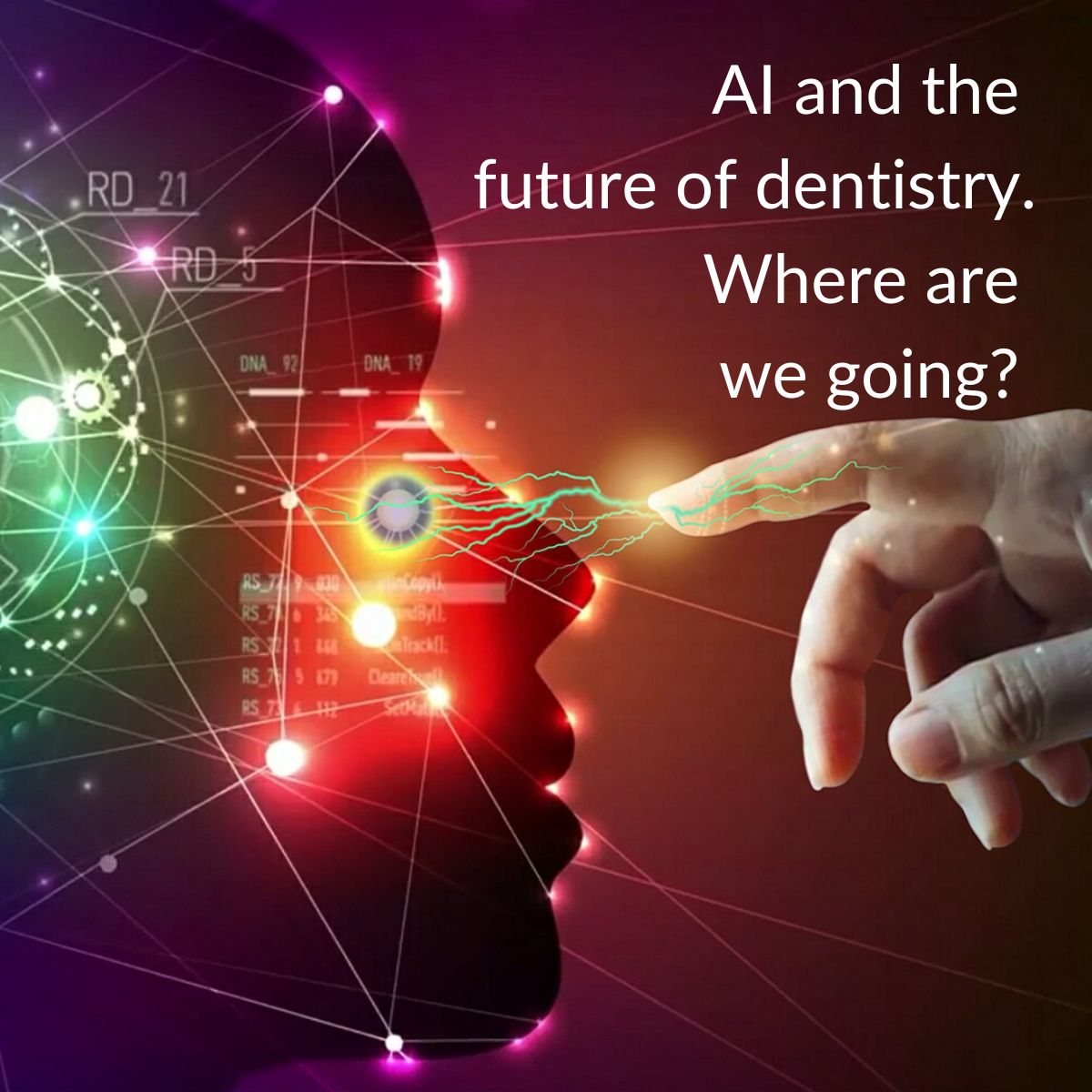
8 New and Emerging Technologies for Your Dental Practice

It’s a brave new world for your dental practice. Let’s look at how to optimize it for your best outcomes. Back in March I attended Abundance360, an incredible mastermind hosted by Peter Diamandis, bringing together sharp intellectual minds from across the ideological and economic spectrum. The mastermind is designed with one goal: to upgrade your mindset so you’re ready for the incredible advancements every single business, philanthropic and investment sector is facing in the 21st century. If you want to up your game, this is the place to be, learn and grow from the best of the best.  

Since then, I have been fervently delving into new technologies affecting the dental industry and dental practices specifically. The landscape for dental advancement is astounding and constantly changing. So, I thought I would list some of the most crucial new technologies here to give you, the dentist and dental practice owner, an overview of the brave new world of dentistry in the 21st century.  

It’s an exciting, challenging and sometimes overwhelming phase for our industry so I hope this list gives you some insight, knowledge and even direction for where you want your dental practice to go and how you want to get there.  

8 Emerging Technologies to Consider for Your Dental Practice 

As the dental industry continues to evolve, new technologies are constantly being developed to improve patient care, enhance diagnosis and treatment, and streamline dental practice management. In this post, I explore eight cutting-edge and emerging technologies that are revolutionizing the field of dentistry. From advanced imaging systems to artificial intelligence-powered tools, these innovations are transforming the way dentists work and improving overall dental experiences for patients.  

1. 3D Printing in Dentistry: 

  • The advent of 3D printing technology has opened up a world of possibilities in dentistry. From creating precise models for orthodontic treatments to fabricating crowns and bridges, 3D printers enable dentists to produce custom-made dental prosthetics quickly and cost-effectively. This technology reduces turnaround time, enhances accuracy, and allows for greater patient involvement in treatment planning. 

2. Augmented Reality (AR) for Dental Patient Education: 

  • AR technology provides a unique opportunity for dentists to enhance patient education and treatment understanding. By using AR glasses or smartphone apps, dentists can overlay digital information onto the patient’s real-time view, helping them visualize treatment options, outcomes, and oral hygiene techniques. This interactive approach improves patient engagement and empowers them to make informed decisions about their dental health.

3. Artificial Intelligence (AI) in Dental Diagnosis: 

  • AI algorithms are now being employed in dentistry to assist in the early detection of oral diseases, such as cavities and periodontal conditions. By analyzing digital images, AI-powered software can quickly identify abnormalities and alert dentists to potential problem areas. This technology enables more accurate and efficient diagnosis, leading to timely intervention and improved patient outcomes.
AI Technology is here to stay

4. Teledentistry for Your Dental Practice: 

  • Teledentistry is rapidly gaining popularity, especially in remote areas and underserved communities. Through secure video conferencing, dentists can remotely assess and diagnose oral health conditions, provide treatment recommendations, and offer follow-up consultations. Teledentistry improves access to dental care, reduces travel time and costs for patients, and allows for prompt intervention, ultimately leading to better oral health outcomes. 

5. Digital Impressions: 

  • Digital impression systems have replaced traditional messy impression materials with intraoral scanners, simplifying the process of capturing accurate dental impressions. These scanners create highly detailed 3D digital models of patients’ teeth and oral tissues, eliminating the discomfort associated with traditional impressions. Digital impressions enhance the accuracy of restorations, such as crowns and veneers, and facilitate seamless communication between dentists and dental laboratories. 

6. Laser Dentistry: 

  • Laser technology has made significant advancements in dentistry, offering numerous benefits over traditional tools and techniques. Dental lasers are used for various procedures, including gum contouring, cavity preparation, and soft tissue surgeries. Lasers minimize discomfort, reduce bleeding and swelling, promote faster healing, and can even sterilize the treatment area. The precision and versatility of lasers make them indispensable tools for modern dental practices. 

7. Cone Beam Computed Tomography (CBCT): 

  • CBCT imaging systems provide detailed 3D images of a patient’s oral structures, including teeth, jawbones, and surrounding tissues. Unlike traditional 2D dental X-rays, CBCT scans offer a comprehensive view, aiding in accurate diagnoses, treatment planning for dental implants, and orthodontic evaluations. This advanced imaging technology enhances the dentist’s ability to visualize anatomical structures and deliver more precise and personalized treatments. 

8. Robotic Dentistry: 

  • Robotic systems are entering the dental field, assisting dentists in performing complex procedures with enhanced precision and control. These robots can assist in tasks such as dental implant placement, tooth extractions, and root canal treatments. Robotic dentistry improves procedural accuracy, reduces the risk of human error, and enhances patient safety and comfort. 

The Future of Dentistry Belongs with Dentists 

The dental industry is experiencing a rapid wave of emerging technologies, from AI-driven diagnostics to advanced imaging, automation, and digital workflows. These innovations are reshaping how dentists diagnose, treat, and manage care, while also improving patient experience and operational efficiency.

But technology alone doesn’t create progress. The practices that benefit most from innovation are the ones that adopt new tools with intention, measuring impact, tracking outcomes, and making decisions based on data rather than excitement. When implemented thoughtfully, technology can reduce wait times, improve team efficiency, support scalability, and increase the long-term value of your dental practice.

That’s why we created the OPA KPI Tracker. This tool helps dental entrepreneurs evaluate how new technologies are actually affecting performance, so you can see what’s working, what’s not, and where to invest next. When your decisions are grounded in clear metrics, innovation becomes a strategic advantage instead of a financial risk.

Thinking about scaling your dental practice through technology?

AI and Your Dental Practice: 6 Actionable & Achievable Applications

Is your dental practice ready for the future? I recently attended the Abundance360 Summit hosted by Peter Diamandis. Abundance360 is an annual event where “visionary entrepreneurs, investors, and executives meet to solve the world’s biggest challenges.” It’s a yearly mastermind with community-led mini-masterminds, monthly workshops, and year-round coaching designed to support entrepreneurs to challenge their mindsets and expand their comfort zones constantly.  

This year’s theme for the event was about learning to leverage new technologies, specifically AI, in your business. The summit provocatively stated, “In the next ten years, we’ll experience more progress than in the last 100 years.” There is so much new technology, sensors, AI, robotics, 3D printing, synthetic biology, blockchain, etc., that it can be highly intimidating and challenging to know what to implement in your dental practice, much less how.  

New Technologies and Your Dental Practice 

Abundance360 wants to inform, instruct and guide entrepreneurs on how and where to use these technologies so business owners feel empowered to use them rather than be so intimidated they walk away. Doesn’t it feel like we’ve already been moving at light speed in the first half of the 21st century? How can we go any faster? And if we, as entrepreneurs, are not ready, we will be left behind. So, I want to use this post to enlighten you about new and emerging technologies and how they might fit into your practice. My goal is to inform and prepare you, the dental entrepreneur, so you feel excited, rather than overwhelmed, by what is coming. 

One of the recurring themes of the conference was to show businesses that fail to incorporate AI within the next 5 to 10 years would be left behind or eliminated. While the conference covered a broad range of sectors, I was most interested in how AI applied to dental practices and the dental industry. In this blog post, I’ll explore the potential ways AI can be integrated into dental procedures and the benefits they will bring to dental entrepreneurs. Let’s dig in.  

AI in your dental practice

Six Areas of Emerging Technologies Applied to Dental Care 

So much new technology is being designed, created, and innovated that figuring out where to start feels challenging. Below are six areas of emerging technology that I’ve curated for this post that are simple to investigate and implement in your practice.  

Of course, you will face some challenges, there will be a learning curve, and you may even experience push-back from your teams and even your patients. Still, taking all of this in stride and creating a new mindset of embracing challenges, these new tools will enhance rather than hinder your practice.  

AI Diagnostic Support in Your Dental Practice 

  • One of the most immediate applications of AI in dentistry is its ability to enhance diagnostic accuracy. AI-powered tools can analyze X-rays and dental images, quickly identifying issues the human eye could miss. With a more accurate and timely diagnosis, you can provide more targeted and better treatment plans, ultimately improving patient outcomes. 

Dental Patient Engagement and Communication 

  • Your dental practice can leverage AI chatbots and virtual assistants to enhance patient communication and response. By handling appointment scheduling and reminders, AI can streamline administrative processes and free your staff to focus on more critical tasks. Furthermore, AI-powered virtual assistants can provide personalized oral health tips, answer FAQs and check in with patients on their health plans fostering deeper patient engagement and promoting preventative care. 

Treatment Planning and Customization for Dental Practices 

  • Advanced AI algorithms aid you in developing personalized treatment plans by analyzing various factors such as a patient’s medical history, current known conditions, and personal preferences. So, then you can create tailored treatment plans that cater to your patient’s unique needs. This way, you use AI to consider many factors rather than yourself, trying to remember and write down every patient’s specific condition, requirements, preferences, etc.  

Robotic-Assisted Dentistry 

  • Although still in its infancy, robotic-assisted dentistry holds tremendous potential for the future. AI-powered robots can assist dental professionals in intricate procedures with increased precision, reduced fatigue, and shortened procedure time. As technology advances, we can expect to see more complex procedures being carried out with the help of AI-driven robotics.  

Dental Practice Management and Efficiency 

  • AI has the potential to revolutionize your practice management by automating repetitive tasks and optimizing resource allocation. From inventory management to billing and insurance claim processing, AI can identify patterns and trends that lead to cost-saving opportunities and more efficient operations. We see these applications already in companies like Amazon and industries like shipping logistics. And that same type of application can be implemented in your dental practice to streamline specific tasks and processes.  

Continuing Education and Skill Development within the Dental Industry 

  • Finally, using AI-driven educational tools, you can stay updated with the latest industry advancements and best practices. AI can also help you identify knowledge gaps and recommend targeted learning materials, ensuring you remain at the forefront of your field. How incredible is that? An AI tool will automatically give you reminders, strategies, and tools to keep you competitive and informed about new knowledge and technology; that is a game-changer.    

A Brave New World for Dental Entrepreneurs—Grounded in What Matters

Integrating AI into your dental practice opens powerful opportunities for optimization and growth. From improving patient outcomes to streamlining administrative tasks, the potential is real—and accelerating fast. Dentistry is no exception to this shift, and adopting the right technologies can absolutely strengthen your practice’s long-term relevance and competitiveness.

But with innovation moving this quickly, it’s normal to feel overwhelmed. Where do you start? Which tools actually make sense for your practice? And how do you know whether a new technology is helping—or just adding complexity?

The most effective way to approach AI is to ground innovation in clear performance metrics. That’s why we created our KPI Tracker, to help dental entrepreneurs measure what truly matters before, during, and after adopting new tools. When you know your numbers, you can confidently test new technologies, evaluate impact, and scale what works—without guesswork.

Start small. Choose one or two innovations that align with your goals. Track the results. Let your data guide your decisions.

Ready to innovate with clarity instead of overwhelm?